






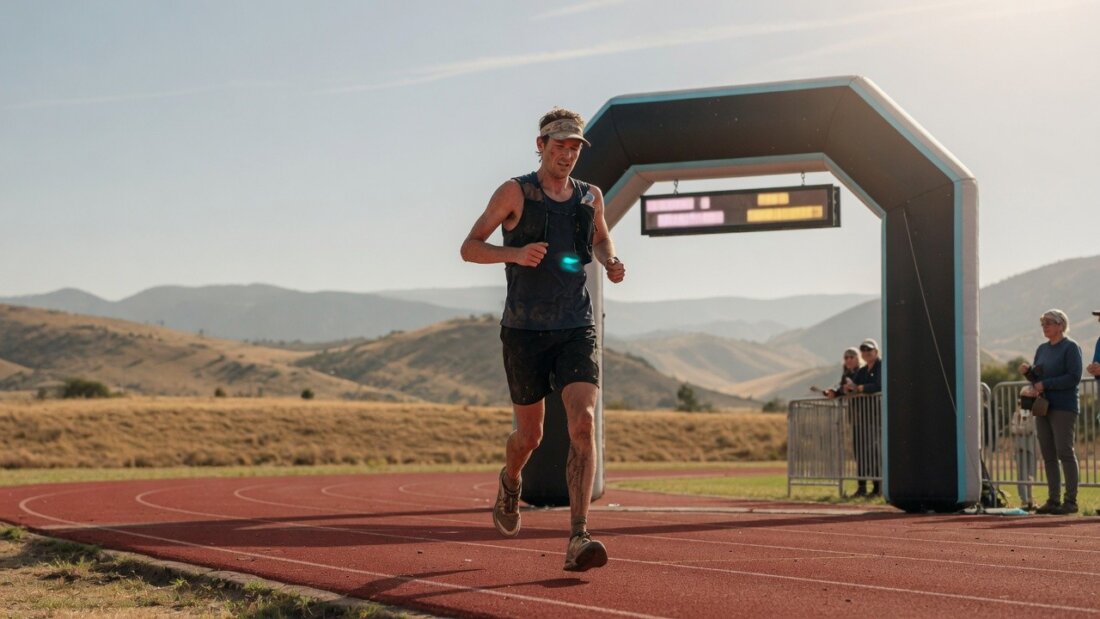
Western States 100 2026: Bouillard shatters the record

5 min read
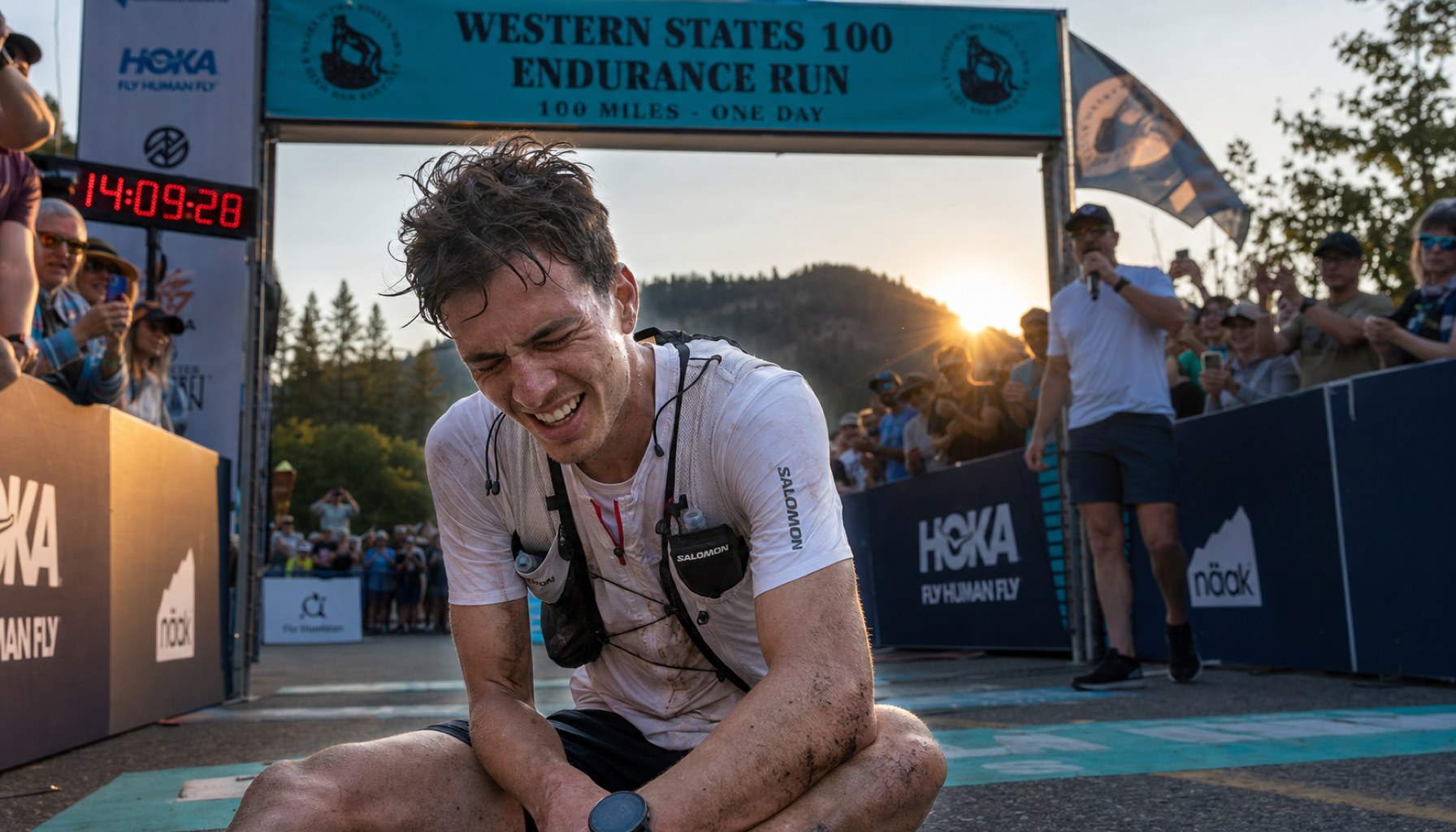
13:46:15. That’s the time Vincent Bouillard crossed the finish line at the Western States 100-and shattered Jim Walmsley’s 2019 course record by 23 minutes and 12 seconds. Exactly one year earlier, the Frenchman had dropped out at mile 80 of the same race. This time he didn’t just finish; he ran the world’s oldest 100-mile trail race faster than any human ever has. And he wasn’t alone: three men broke the old record mark.
 Quick Recap
- ▸New course record: Vincent Bouillard finishes in 13:46:15, slicing 23 minutes and 12 seconds off Walmsley’s 2019 benchmark.
- ▸Redemption after DNF: A year earlier Bouillard had dropped at mile 80. This time he ran sub-14 hours.
- ▸Three under the old mark: Francesco Puppi (13:51:08) and Ryan Montgomery (13:53:55) also beat Walmsley’s record.
- ▸Record for the women too: Jenn Lichter clocks 15:28:05 on her 100-mile debut, eclipsing Courtney Dauwalter’s best.
- ▸The weather factor: Cool conditions in the canyon made the record pace possible.
What happened in the Sierra Canyons
The Western States 100 covers over 100 miles from Olympic Valley to Auburn, winding through the High Country of the Sierra Nevada, descending into the notorious canyons, and crossing the American River. The race has been the gold standard in ultratrail since 1974. And rarely has a record felt so overdue: Walmsley’s 14:09:28 from 2019 was seen as nearly untouchable.
Bouillard didn’t just shave it-he shattered it. His 13:46:15 means sub-14 hours, a mark long considered a theoretical ceiling. What’s even more striking is the depth at the front: with Francesco Puppi making his 100-mile debut in 13:51:08 and Ryan Montgomery in 13:53:55, three runners dipped under the old record. Such a podium has never been seen in Auburn.
From DNF to record in twelve months
The real story isn’t a split-it’s an arc. Reading only the time misses what carried this victory.
2025: Out at Mile 80
Last year, Bouillard dropped deep into the race, just before the finish came into sight. A DNF at that point is brutal because most of the work is already done. These are the exact races that decide whether someone comes back-or quits.
2026: Cool weather as the game-changer
The canyons between Mile 30 and 60 are the record-killers when the heat sets in. This time, it stayed cool. That stripped the race of its usual grind and allowed a pace no one could have held in a heatwave year.
The defending champion drops out
Jim Walmsley, four-time winner and record holder, pulled out just before Foresthill at Mile 62. The man whose mark fell wasn’t even on the course that day to defend it.
What the record means for your own running
A sub-14-hour 100-mile race is a different world from your everyday training. Yet embedded in that race day is a lesson that applies to every distance: the weather dictates the pacing, not your ego. Bouillard and Puppi could only maintain that record pace because the conditions allowed it. In a heatwave year, the same plan would have been a sure-fire recipe for a DNF.
For you, that means your target time is a hypothesis, not a contract. Trying to hold the same splits at 32 °C as you would at 14 °C will leave you just as blown up in the canyons as it does on your local summer loop. We dissected how heat and fueling decide the outcome over a long day in our hydration-vest test. And if you want to grasp the mechanics of big mountain races, the lessons from the Zugspitz Ultratrail offer the European take on the same physics.
The second lesson is about the comeback. A DNF isn’t a verdict; it’s an intermediate time. Bouillard needed twelve months to turn an exit at mile 80 into a course record. That’s the real headline of race day, no matter how far you run yourself.
Cool-down
Click on a question to reveal the answer.
How significant is a 23-minute lead over 100 miles?
Why is cool weather so crucial?
What about the women’s race?
Can I sign up for Western States as a hobby runner?

Editorial Team IBS Publishing ››
Hydration-vest field test: Which ones actually carry →Zugspitz Ultratrail 2026: Lessons for your mountain race →Broken Arrow 23K: Kiriago smashes the course record →1,300 km solo across the Alps from Munich →
Image source: Cover and article images AI-generated (May 2026)