






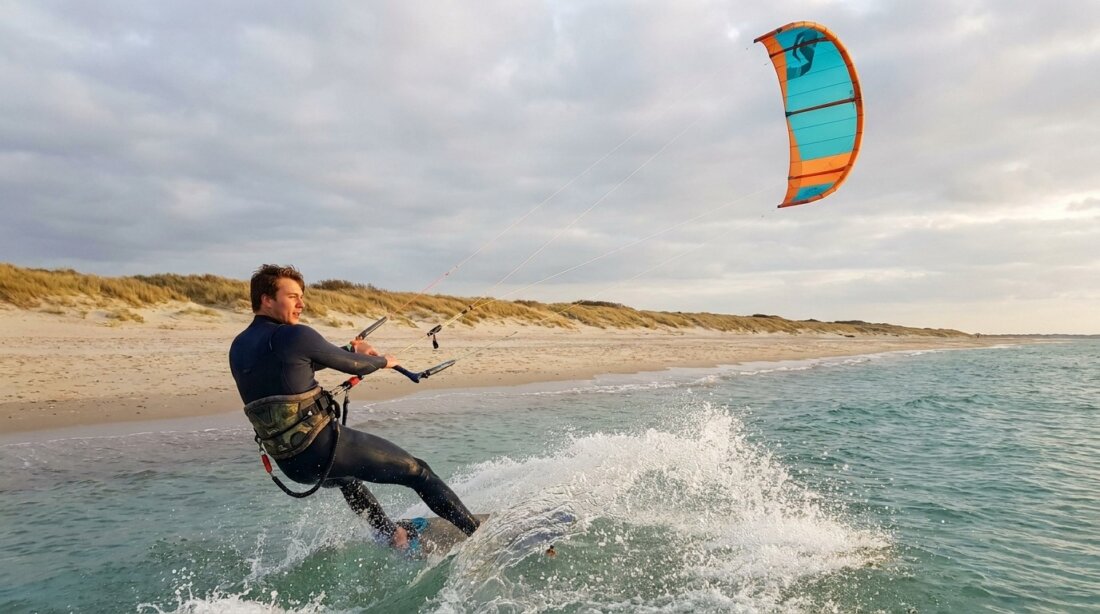
Learning to Kitesurf on the North and Baltic Seas
7 min read
You learn to kitesurf by reading the wind and keeping your kite under clean control. Along the North and Baltic Seas, you’ll find shallow shoreline spots in summer where you can practice the basics before waves and currents enter the picture. Crucial factors include the right wind window, the perfect spot, a reputable kite school, and patience when you take your first water start.
 Quick Sprint
- ▸ In summer, stable thermal days along the North and Baltic Seas often deliver 12 to 20 knots from midday onward. Mornings and evenings are usually too calm or too gusty for beginners.
- ▸ Fehmarn, the spots near Wiek and Dranske on Rügen, and the sandbanks of St. Peter-Ording offer shallow water and established schools-but the wind must match the spot’s orientation.
- ▸ A beginner course typically lasts three to five days with roughly 12 to 15 hours of practice. Afterward, you’ll still need support for your first solo sessions.
- ▸ During body dragging, you glide through the water without your board, learning line control and kite positioning before attempting the water start.
- ▸ A quick-release system, safety checks, and a buddy onshore are mandatory. An untrained kite can quickly become uncontrollable in gusts.
Summer wind window: When does the wind cooperate on the North and Baltic Seas?
For your first attempts, aim for steady winds of 12 to 20 knots: enough pull for control with a little room for error. In summer, thermal activity along the North and Baltic Seas often kicks in only by afternoon.
Early mornings and late evenings on the Baltic Sea are frequently too calm. By afternoon, however, the wind can turn gusty. Check the forecast the day before and block out multiple time slots-so your first day isn’t held hostage by a single prediction.
3 shoreline spots on the North and Baltic Seas for your first water starts
In shallow water, your kite stays calm overhead at first. You let it pull you during your first body drag, feel the current on your legs, and learn to manage the lines under tension.
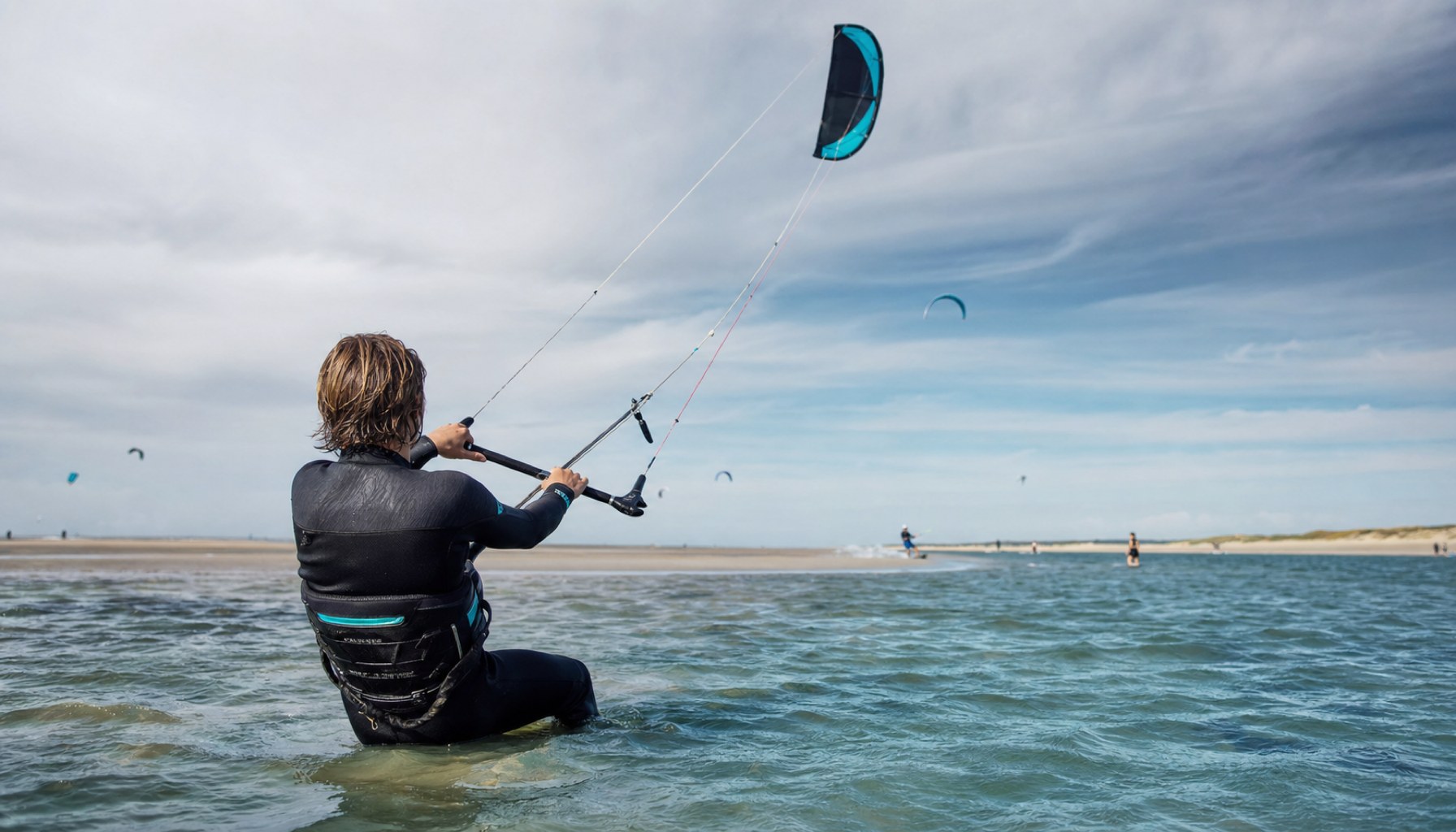
A shoreline spot gives you space to try and fail. You can stand up after a mistake, catch your breath, and retrieve your board in the shallow water. Fehmarn, the areas near Wiek and Dranske on Rügen, and the sandbanks of St. Peter-Ording are popular with newcomers.
Which spot works on a given day depends on wind direction and tides. When in doubt, ask the local school-they know the hidden gems and which section suits the current conditions.
Start with a kite school: Three to five days to your first glide
From the outside, kitesurfing looks effortless. But behind the bar you immediately assume responsibility: a kite generates enormous power and a gust can endanger you and others on the beach. That’s why your first step belongs in a certified school, for example following VDWS or IKO standards.
In three to five days you’ll learn how to set up on the beach, control the kite and progress to your first glide. This includes the safety check, the quick-release and parking the kite in the neutral zone. With that foundation you’re ready for your first solo sessions.
From body-drag to board: which sequence works best?
Many beginners want to hop straight onto the board. A safer order is: first master kite control on land, then handle the lines and practice body-drag in the water.
During body-drag you let yourself be pulled through the water without a board and feel how the kite responds to your steering. Only when that feels secure do you move on to water-starting with the board. This builds technique in the right order and gets you on the board more confidently in your course.
Line setup: 3 mistakes that cost you time
You often lose time right at setup. Tangled lines, a skipped safety check or a kite flown too close to the edge slow the session down.
Lay the lines neatly before launching the kite. Inspect every connection and test the quick-release on dry land. As a beginner, keep the kite close to the neutral twelve-o’clock position-there it has the least pull and forgives steering errors.
Choosing your spot on the same day: wind direction before dream location
A ranking list doesn’t replace an on-site check. Wind direction, tides and the number of beachgoers decide whether a spot works in the morning and is already too crowded by afternoon.
Use a weather app for the big picture, then verify the spot in person. Schools and kite shops know the current conditions and can tell you which launch will work today. Yesterday’s ranking doesn’t reflect today’s variables.
Cool-down
Click on a question to reveal the answer.
How much wind do I really need as a beginner?
Can I go out on my own after the basic course?
How much does a kitesurfing course cost on the North or Baltic Sea?
Do I need my own gear to start?
What should I do if the wind suddenly dies down?

Editorial Team IBS Publishing ››
Tour de France in Barcelona: the heat lesson for your summer training → Hydration vests put to the test: which ones really deliver → What Wushu brings to your trail training that no gym ever could → Your first marathon: the 16-week plan that actually works → Mountain of Hell 2026: the mass start with 1,073 riders →
Image source: AI-generated (July 2026)
Images in article: AI-generated (May 2026)