






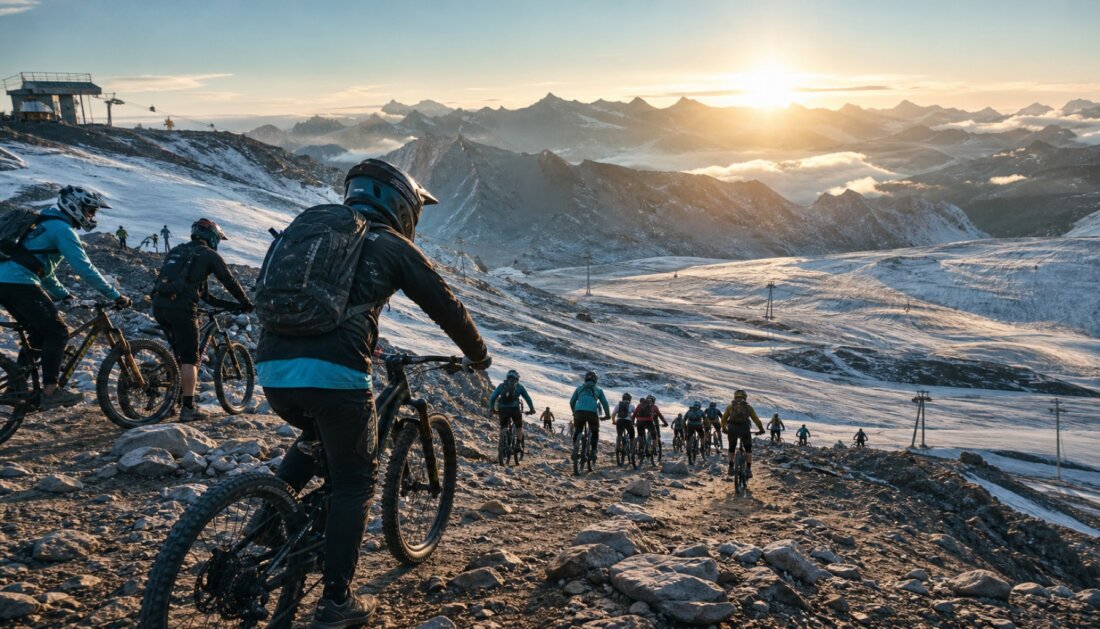
Mountain of Hell 2026: The Mass Start with 1,073 Riders
6 min read
On 21 June 2026, 1,073 mountain bikers lined up at 3,413 m above sea level on the glacier at Les Deux Alpes. A starting pistol fired, and the entire field shot off at once: downhill through snow, scree and the bike park, 2,500 vertical metres in one go. You don’t win the Mountain of Hell by pedalling harder. You win by staying upright in the chaos. That’s exactly why this race is popping up in every other feed right now.
 Quick Sprint
- The 2026 Mountain of Hell rolled off on 21 June in Les Deux Alpes with the largest starting field in its history: 1,073 riders from 27 countries.
- A mass start at 3,413 m, followed by a 2,500 m descent over 27 km through snow and the bike park.
- Kimi Viardot took the win in about 24 minutes, a mere 12 seconds ahead of Damien Oton.
- What the viral helmet-cam clips don’t show: the real risk lies in the first 90 seconds, not the speed.
1,073 people, one starting shot, no plan B
Imagine standing on a glacier. Freezing air in your face, thin air in your lungs, a thousand riders beside you in full-face helmets and downhill bikes. Then the gun fires. Everyone goes at once. Downhill, onto snow.
That’s how the Mountain of Hell begins. In 2026 it was bigger than ever. On 21 June, 1,073 starters from 27 nations hurled themselves down the course in Les Deux Alpes, including e-bike and kids’ categories. Classic competition? More like organised chaos with a stopwatch.
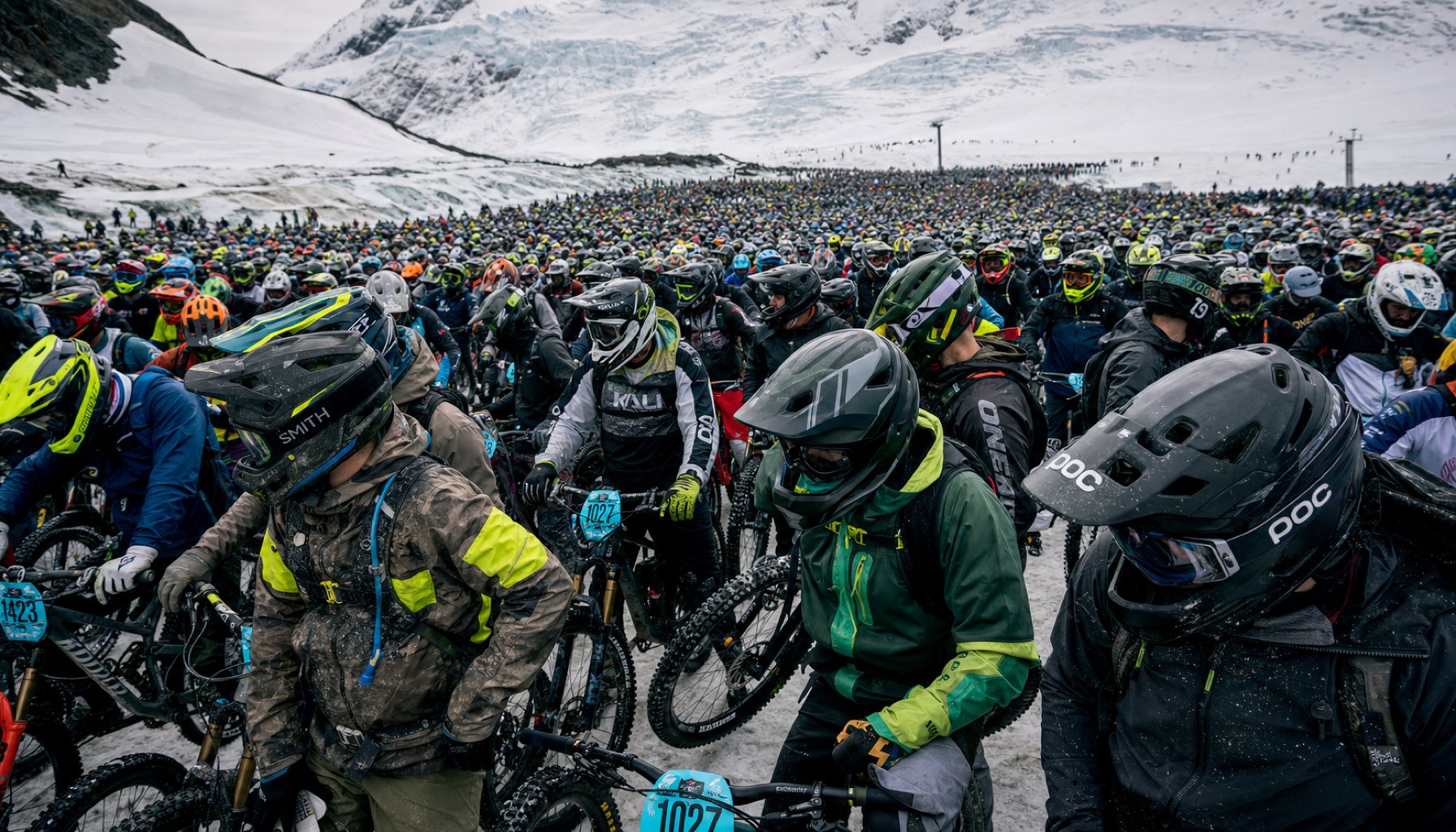
The clips you’re seeing everywhere show the big moments: snow sections, jumps, speed in the lower bike park. The tougher part comes higher up, when the field first narrows and a thousand riders hunt the same line. That’s where your day either rolls on or ends right there.
Why this course is so merciless
The numbers explain why this race can flip in an instant. From the start line on the glacier down to the valley, there are 2,500 metres of descent over 27 kilometres. Snow at the top, loose terrain in the middle, and the fast-built bike park at the bottom. Three completely different surfaces in under half an hour if you’re riding up front.
The snow at the top is sneakier than the speed at the bottom. With thin oxygen and a cold surface, your tyres behave differently than on your local trail. Hit the front brake too hard here and you’re down. That feel for traction and line choice isn’t something you improvise on race day; it’s months of trail time you need to dial in.
Kimi Viardot carved the whole thing in about 24 minutes, beating Damien Oton by 12 seconds. Nearly 25 minutes of full-throttle descent. That speaks more to consistency than courage.
What to take away if this is now giving you goosebumps
I get the pull. You watch those images and immediately think: Could I do that too? Honest answer: maybe, but not on the spur of the moment. The Mountain of Hell isn’t a check-box for a free Tuesday afternoon.
If the bug bites, don’t start on the glacier. Start at the bottom: clean braking, eyes far ahead, body position on steep terrain. Those exact skills decide in the mass start whether you crash or have fun. If you’re just starting out, build real trail confidence first-on proper trails-before you even think about snow.
In the end, it’s the head that counts more than the legs. This race rewards not the hardest pedals, but calm in the chaos. The riders who finish up front aren’t riding on the edge; they’re just below it, letting everyone else make the mistakes.
Cool-down
What exactly is the Mountain of Hell?
Do I need a special bike for this?
How dangerous is the mass start really?
Can I join in as an ambitious hobby rider?
What should I focus on in training first?

Downhill mountain biking: 6-week plan from trail to bike park →Mountain-bike trail skills: vision, braking, cornering →Mountain biking for beginners: your first steps on the trails →Zugspitz Ultratrail 2026: lessons for your mountain training →
Image source: cover and article images AI-generated (May 2026)
Translated from the German original using artificial intelligence. The German version is authoritative.