






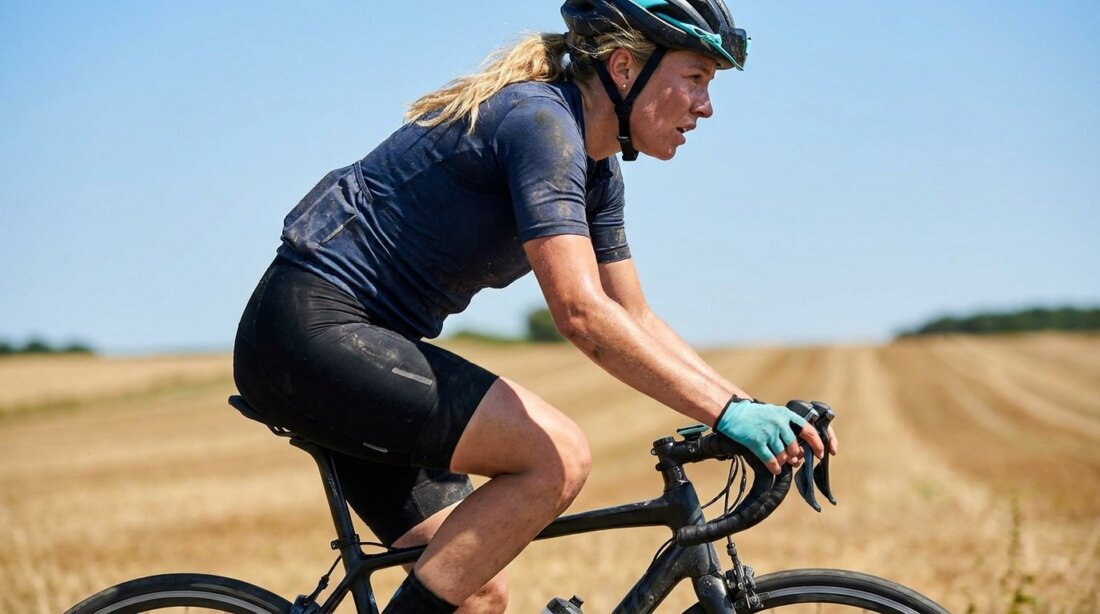
Tour de France in Barcelona: the heat lesson for summer training
7 min read
On 4 July, the first team time trial of the Tour de France in seven years gets underway in Barcelona. The opening week of racing unfolds across Catalonia and the Pyrenees under the Spanish midsummer sun. For you as an endurance athlete, this becomes an open-air lab. How the pros handle heat and pacing is exactly what you can apply to your summer trail, gravel and mountain-bike training.
 Quick Sprint
- ▸The Grand Départ on 4 July in Barcelona features a 19.6 km team time trial-the first since 2017. Each rider is timed individually.
- ▸The opening week begins in Catalonia during the Spanish high summer-your benchmark for heat training and endurance in July.
- ▸Stage 2 from Tarragona to Barcelona covers 168.5 km and 2,500 m of climbing, finishing on Montjuïc-a template for long days in the heat.
- ▸Stage 3 climbs 3,850 m into the Pyrenees, showing what happens when altitude meets already hot legs.
- ▸Heat acclimation takes roughly one to two weeks until your body produces more blood plasma and regulates core temperature better. Steady pacing beats the early surge.
Barcelona in July: why the Tour start is a heat lab
Catalonia in early July is hot, dry and merciless under the afternoon sun. The Tour sends its peloton straight into those conditions-no accident of weather, but the very setting where summer endurance performance is decided.
For you, that means your summer peak lands in the same heat. Planning a long trail race, gravel loop or alpine ride in July? You’ll learn to thrive in the warmth. The pros show you that heat can be trained for long before race day surprises you.
The first step is uncomfortable but simple: seek the heat instead of avoiding it when your goal lies in the sun.
What 19.6 km of team time trialling reveals about your pacing
The opening team time trial is a rarity-its first appearance since 2017. Unlike the old format, every rider’s individual time counts. No one can hide in the slipstream and pocket the strongest teammate’s time at the line.
That’s the pacing lesson. Over a short, intense distance, victory goes to the rider who holds an even effort across every kilometre and doesn’t empty the tank in the opening minutes. Overdo the first kilometres and you’ll pay later with a blow-up that erases every second of early gain.
Apply that to your next hard run or gravel time trial. Mentally divide the course into segments and ride the first one deliberately a notch slower. The feeling of still having reserves will be your biggest advantage at the finish.
168 kilometres and Montjuïc: how pros pace long days in the heat
Stage 2 covers 168.5 kilometres from Tarragona back to Barcelona, with 2,500 metres of climbing and a finale on Montjuïc, the city hill overlooking the metropolis. Almost all of the climbing is packed into the second half.
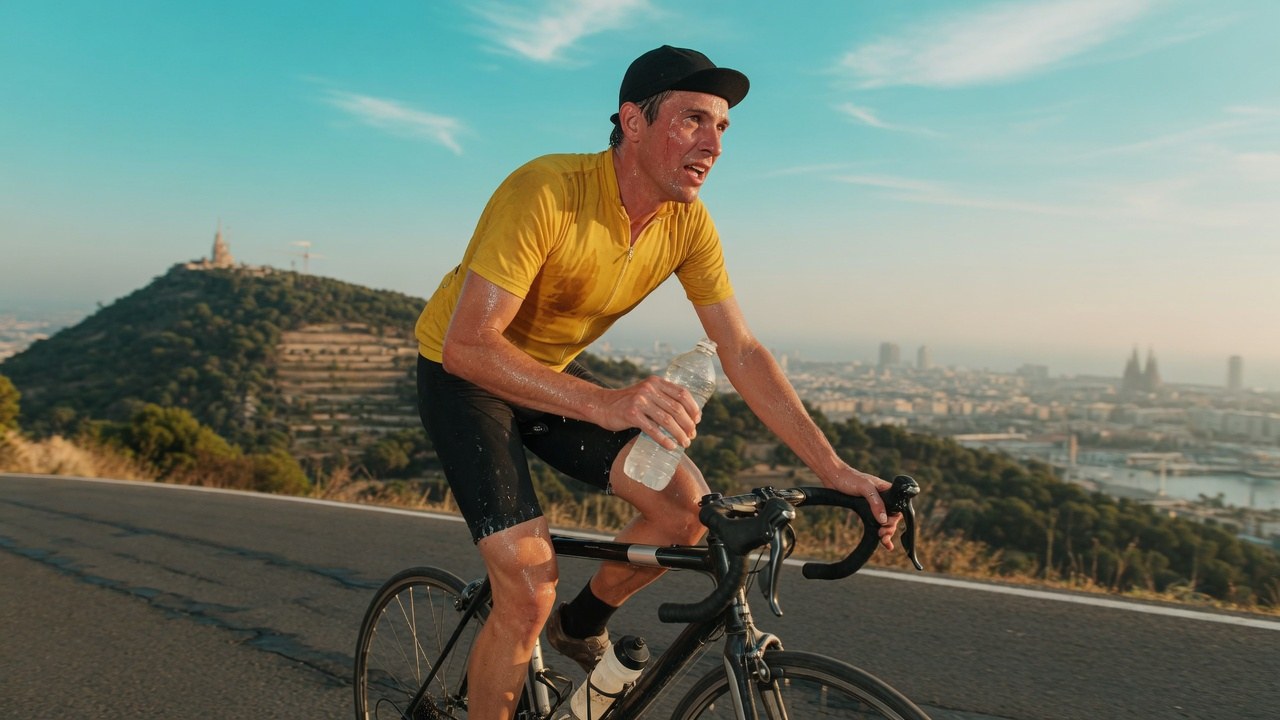
This is a textbook case for energy management. A long day in the heat forgives no early power surge. Pros ride the first half under control, keep fluids and carbs flowing, and save the oats for the final climb.
Apply the same principle to your long summer sessions. Spread your energy across the hours instead of blowing it on the first climb. Eat and drink early and regularly, long before hunger or thirst appear. In the heat your system flips faster than you can react.
Pyrenees on day three: altitude plus heat as a double load
Day three rolls out 195.9 kilometres and 3,850 metres of climbing into the Pyrenees. Now heat is joined by altitude. Both factors tug simultaneously at heart, circulation and mind.
This combination is the toughest school. Your body fights on two fronts: thinner air above and warmth below in the valley. Whoever starts too hard is empty at the summit. The pros’ answer is restraint at the right moment.
If your summer plans take you to the mountains, plan for the double load. Give yourself a few days on site before you tackle the really long tours. Your pace in the first mountain week can look modest without shame.
Plasma volume and core temperature: what your body learns in one to two weeks
Heat acclimation is measurable physiology. When you expose yourself to warmth on a regular basis, your body gradually produces more blood plasma, starts sweating sooner and keeps core temperature more stable. Roughly speaking, this process needs one to two weeks of consistent heat exposure.
That’s the real message behind the Tour’s Catalan curtain-raiser. Elite teams prepare heat acclimation weeks in advance and don’t leave it to the randomness of race day.
For you, that means: if your summer goal lies in the heat, start your preparation early. A few deliberately warm sessions per week over two weeks will give you more on target day than any miracle gear. Three hot days right beforehand won’t cut it.
From tarmac to trail and gravel: what you can steal for your summer training
The beauty of this Tour lesson is that it leaves the asphalt behind once you’ve grasped it. Heat and pacing apply on every surface. Whether you’re tackling a mountain run, planning a long gravel loop or riding your mountain bike in the Alps, the rules stay the same.
Take three things with you. Seek out the heat early when your goal lies in the sun. Start every long session a notch below your normal pace and keep your tempo steady. Eat and drink early, not only when your body is already complaining.
The pros in Barcelona show you how it’s done. The rest is your stretch of road, your summer and the question of when you head out next.
Cool-down
Click on a question to reveal the answer.
Do three hot sessions per week suffice, or do I need two full weeks?
How do I train heat pacing without riding 168 km in one go?
Is heat training on a turbo trainer in the basement worth it?
How will I know my body has adapted to the heat?
What should I do when heat and altitude combine?

Editorial Team IBS Publishing ››
Hydration-vest showdown: which really delivers → What Wushu brings to your trail training that no gym ever could → Your first marathon: the 16-week plan that actually works → Mountain of Hell 2026: the mass start with 1,073 riders → Training data: Coros, Wahoo and Garmin’s data wall →
Image source: title image and article images AI-generated (July 2026)
Translated from the German original using artificial intelligence. The German version is authoritative.