






Training Data: Coros, Wahoo and Garmin’s Data Wall

7 min read
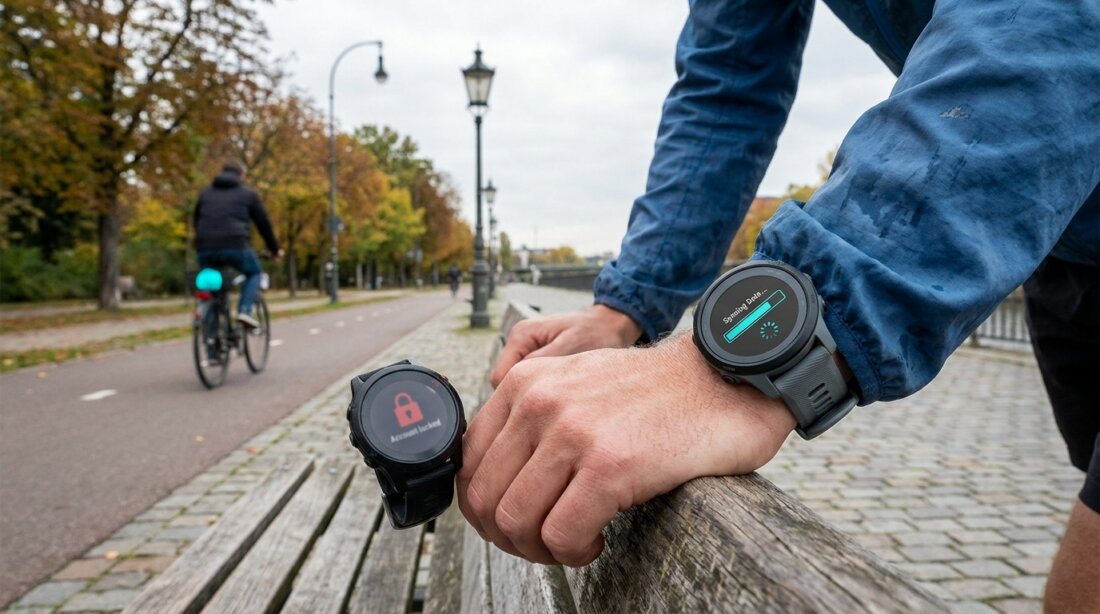
You strap the new watch onto your wrist and head out the door. It’s only when you set it up that the question you never asked before buying suddenly looms large: what happens to six years of training data on the old platform? Every interval, every hill climb, every threshold effort is locked inside an account that makes walking away feel like leaving a part of yourself behind. In April, something shifted in a London studio. Coros and Wahoo opened their platforms to each other. The message was aimed at the manufacturer who wasn’t even in the room: Garmin.
 Quick Sprint
- ▸ On 24 April, Coros and Wahoo opened their APIs to each other. Activities from both devices now automatically appear on both platforms.
- ▸ The real target is Garmin. The market leader keeps training data locked inside its own ecosystem; exporting it is anything but straightforward.
- ▸ Your most valuable data lives in FIT format. Training Load, Body Battery, Power. GPX and TCX leave all that behind.
- ▸ The Garmin phone app offers no file export. A complete export is only possible via the website-and it can take one to two days.
- ▸ Data ownership is becoming a buying criterion. If you plan to switch watches, find out how to get your data out first-before you’re locked in.
What Coros and Wahoo Have Opened in London
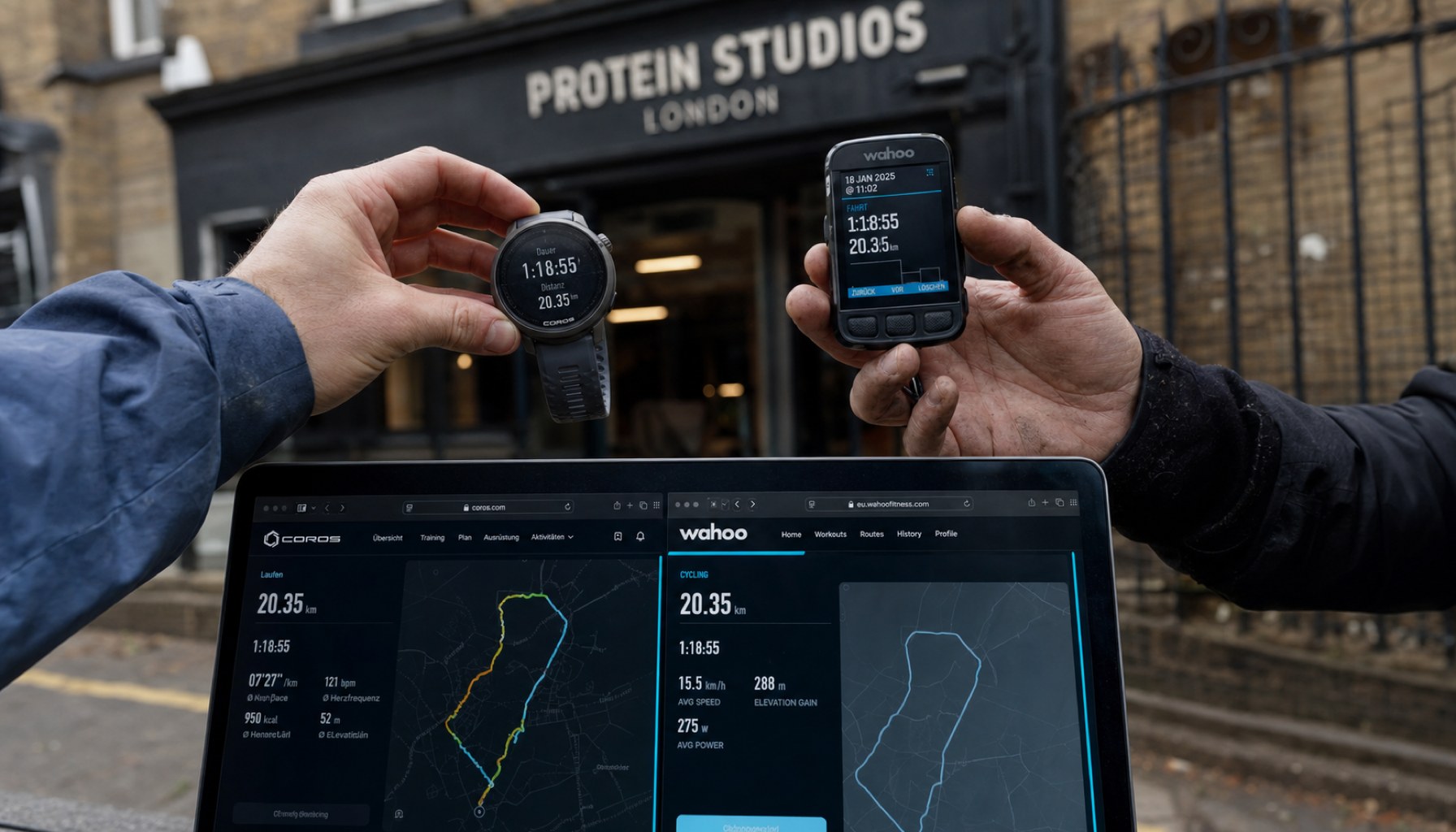
On 24 April, Coros and Wahoo announced their partnership at Protein Studios in London-just days before the London Marathon. Both brands cater to ambitious endurance athletes, but without Garmin’s market dominance. That’s precisely why the move made sense: when one player locks users into its platform, the others must show an exit.
The core of the collaboration is a two-way interface. Data recorded on a Coros watch automatically appears in the Wahoo app, while rides logged on a Wahoo device show up in Coros’s ecosystem. Structured training plans and pre-planned routes weren’t part of the initial launch, but are expected to follow. Additionally, a Coros watch now pairs directly with the KICKR RUN treadmill via a dedicated Bluetooth channel, transmitting metrics like ground contact time and cadence faster than through standard connections.
In practice, this means you no longer have to pick a side. A Coros on your wrist and a Wahoo trainer in your basement will soon tell the same training story. Wahoo even sells the Coros Pace 4 and Apex 4 in its own store. the5krunner interpreted the launch-day announcement as a subtle warning: not a merger yet, but Garmin should take notice.
Why Garmin’s Wall Is Built on the FIT Format
Garmin makes solid hardware. The friction starts when you want your data back. Your most valuable metrics-Training Load, Body Battery, running power, and all the proprietary measurements you bought the watch for-live in the FIT format. Export as GPX and you get route and elevation; the rest is missing. TCX carries a bit more, but still not everything.
You can still pull a single workout as FIT from Garmin’s website, but the mobile app offers no export function in any format. That feels less like a technical oversight and more like a deliberate product choice. If you want your complete history, you must request a full export, which Garmin processes manually and emails back in one to two days. After years of daily uploads, plan on waiting closer to 48 hours.
Syncing to Strava or TrainingPeaks is seamless via partner APIs, yet Garmin controls which doors stay open. The longer you stay, the costlier the exit feels. The real price is psychological: six years of data you’ve grown accustomed to aren’t easily abandoned. That’s the mechanism that keeps you locked in.
Your next watch needs an exit
The Coros-Wahoo alliance isn’t a giant technical leap. What matters is what it sells: openness. Two brands stand up and say your data should flow freely between their ecosystems. That puts the market leader under pressure. When competitors tout data sovereignty, a closed door becomes a liability.
For you on the wrist, this boils down to one thing: ask the platform question before the hardware question. Not just which watch shows the prettier metrics, but how you’ll get out if you ever need to. A watch lasts two or three years; your training history should outlive it. Anyone who’s stared at a half-empty file during a switch won’t forget the lesson.
You don’t have to wait for the brands to solve this for you. How you steer recovery with data ultimately depends on owning that data. A neutral, non-hardware collector removes the dependency. Then you decide which brand lands on your wrist next-not the file you couldn’t take with you.
Cool-down
Click on a question to reveal the answer.
Does the Coros-Wahoo partnership benefit me if I use Garmin?
Can I actually take all my Garmin data with me?
What’s the difference between FIT, GPX, and TCX?
Is switching watches even worth it if I’ll lose data?
Which platform is truly neutral?

Editorial IBS Publishing ››
Trail-running shoes 2026: The release wave from Hoka Mafate X to Salomon S/Lab Pulsar 3 →
72 hours after the marathon: what recovery research really proves →
London Marathon post-race analysis: what elite splits and defending champions teach the amateur runner →
Learn to sail in 2026: earn your Sportbootführerschein See in four weekends + practical training →
London Marathon 2026 today: elite field, weather and what matters →
Image source: title and article images AI-generated (June 2026)
Translated from the German original using artificial intelligence. The German version is authoritative.