






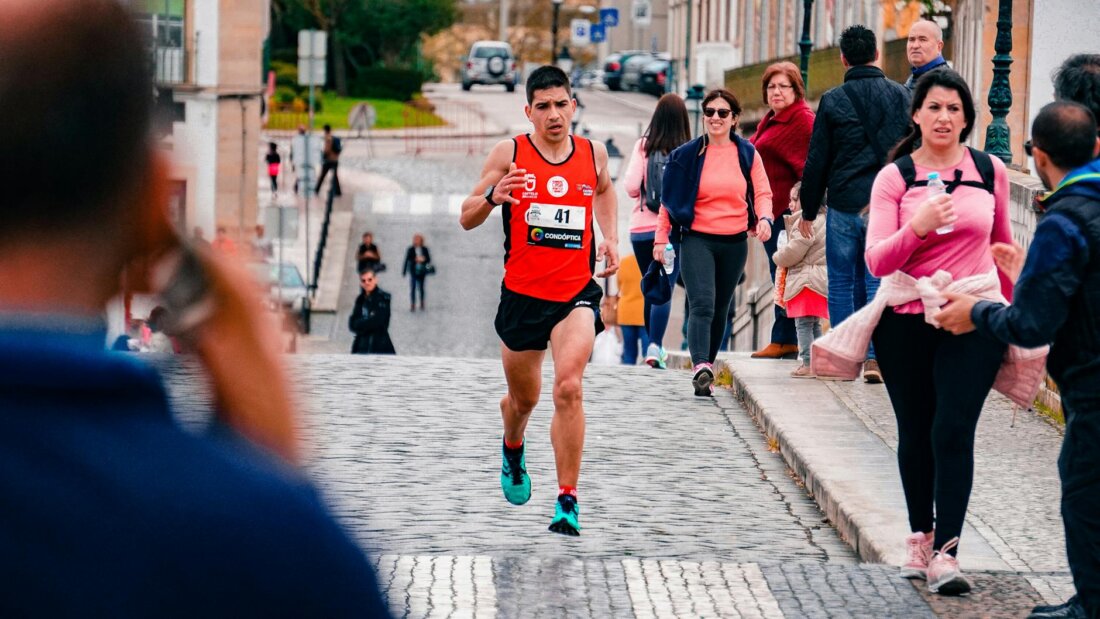
Marathon for Beginners: 16-Week Training Plan

2 min read
Running a marathon isn’t an elite act. Anyone who can spare 45 minutes three to four times a week and trains consistently for 16 weeks can finish the 42.195 km. The challenge isn’t endurance-it’s the patience to go slow in order to finish fast.
Key Takeaways
- Prerequisite: Comfortable running for 60–90 minutes without stopping-this is the foundation for this plan.
- 80/20 rule: 80% of training at low intensity, 20% hard. Most beginners do the opposite.
- Weekend long run: The cornerstone of every marathon plan-gradually increase distance once a week.
- Wall at km 32: Your glycogen stores run out after ~30 km-prepare mentally and physically.
- Recovery week: Every fourth week cut volume by 30% to regenerate.
The Core Principles of Marathon Training
Build the base (weeks 1–4): Run four times a week, 30–60 minutes each, all at an easy pace (conversational-you can speak while running). No pace targets, just feel. Aim for 40–50 km per week as your base.
Build up (weeks 5–12): Increase the long run by 1–2 km every week, starting at 18 km and maxing out at 32–35 km. Midweek: two medium runs (12–18 km) and one tempo interval. Rest days are mandatory-no “easy run,” just real recovery.
Tapering (weeks 13–16): Reduce total volume by 30–40%, but keep intensity and pace. Your body tops up energy reserves. Many beginners feel sluggish in this phase-it’s normal.
Nutrition and Gear
Nutrition: Don’t diet for a marathon-you’ll burn 400–700 kcal per hour while training. Carbs are your friends: oats, bananas, whole-grain pasta. On long runs over 90 minutes, fuel with carbs (gels, dates, banana). Hydrate: 400–600 ml per hour; add electrolytes for runs over two hours.
Shoes: Your most important investment. Get a gait analysis at a specialty store (free in most shops). Budget at least €120, ideally €150–180 for a pair that truly fits. Carbon-plated shoes are overrated for beginners-comfortable cushioning matters more.
Race Day: What Really Matters
Start Pace: Half of all first-timers fail because they go out too fast. The start feels euphoric, adrenaline surges – but by kilometre 32 it catches up with everyone. Plan to run the first 10 km 15–20 seconds slower than your target pace. “Start slow, finish strong.”
The Wall: When glycogen runs out around km 30–35 and the body switches to fat-burning, every step feels heavier. Counter this with regular gels from km 18, mental preparation, and mini-goals (“just to the next station”).
Frequently Asked Questions
How many weeks of preparation do I need for my first marathon?
A good rule of thumb: 16–20 weeks with a base of 30–40 km per week. If you’ve never run more than 60 minutes at a stretch, build a 3–4-month base first. Don’t underestimate the prep – your body needs time.
What’s the right race pace for my first marathon?
Calculate the pace you know from long training runs and run 10–20 seconds per kilometre slower. Want to finish your first one without suffering? Target pace = long-run pace + 15–20 sec/km.
Which German marathons are good for beginners?
Berlin Marathon (very flat, electric atmosphere), Frankfurt Marathon (fast, well-organised), Hamburg Marathon (April, great spring conditions). All three have large fields and plenty of on-course support.
More from our magazines
- Recovery Training: Why Regeneration Is Crucial
- Marathon Travel: Top City Marathons Worldwide – InspiredByLuxury
More from InspiredBySports
Feature image source: Pexels / RUN 4 FFWPU
Translated from the German original using artificial intelligence. The German version is authoritative.