






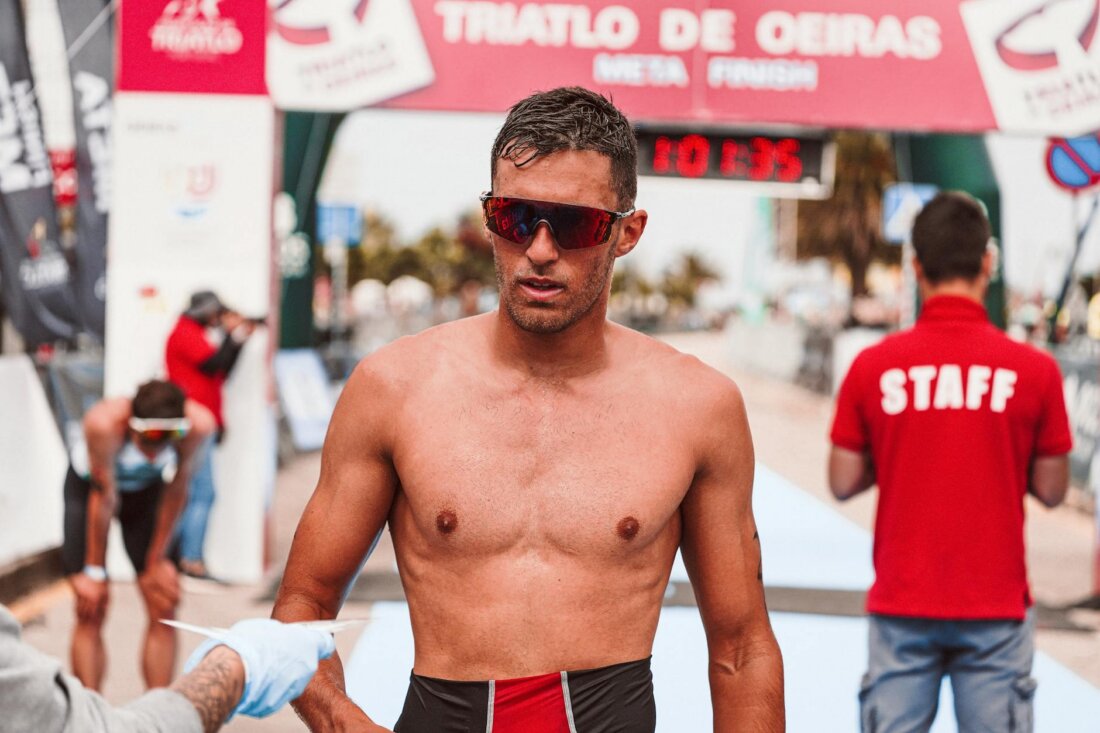
Fall Triathlon 2025: Prep Tips for Beginners
Individual Sports
Padel-Welle 2026: Warum die ATP-Tour jetzt nachzieht und was das für DACH heißt →
Skimboarding an Nord- und Ostsee 2026: Spots, Equipment und Einsteiger-Saison →
Trail-Running-Schuhe 2026: Die neue Release-Welle →
Mobility Training: 15 Minuten, die dein Training verändern →
London Marathon Post-Race Analyse: Was Elite-Splits und Titelverteidiger dem Hobbyläufer zeigen →

2 Min. read
Triathlon sounds like extreme sport for pros. But a sprint triathlon (750m swim, 20km bike, 5km run) is achievable in 12 weeks with honest training — even if you’re not an athlete today.
Key facts at a glance
- Sprint triathlon: 750m swim + 20km bike + 5km run — ideal entry-level format
- Prerequisites: ability to swim 500m non-stop, cycle 10km, run 3km
- 12-week plan: 3–4 training sessions/week, alternating all three disciplines
- Transition training (T1/T2): often underestimated, can save several minutes
- Equipment: triathlon suit, road or hybrid bike, running shoes — no carbon bike required
Why triathlon is the ultimate fitness challenge
Triathlon is the crown jewel of endurance sports — not because it’s the hardest single discipline, but because it combines three in one. No other sport trains your muscle groups, energy systems, and mental resilience as completely.
Crossing the finish line ranks among the most intense experiences sports can offer. Many first-time finishers describe it as life-changing — not because of athletic performance, but because of the realization of what your body can achieve when your mind stays strong.
The 12-week training plan at a glance
Weeks 1–4 (Base phase): 3 sessions per week — one per discipline. Short distances, technique-focused. Swim: breathing patterns and freestyle technique. Bike: cadence and basic endurance. Run: easy aerobic pace, no overexertion.
Weeks 5–8 (Build phase): 4 sessions/week. Introduce brick workouts: cycling immediately followed by running — trains muscle transition. Weeks 9–12 (Race prep): increase intensity, two weeks before race: tapering (reduce volume and intensity for recovery).
Transition and Race Day Strategy for Beginners
Transition (T1: swim to bike, T2: bike to run) is the fourth discipline of triathlon. A poor transition can cost you 3–5 minutes — a well-organized one takes under 90 seconds. Practice laying out your gear in advance: helmet open on the handlebars, race number on your belt, shoes pre-opened and ready.
Race day strategy for beginners: Start slow — the first 200 meters of swimming always feel chaotic. Bike: ride at 10% below your usual training pace. Run: begin at a steady pace, then gradually increase. The goal is to finish, not to set a personal best.
Frequently Asked Questions
Click on a question to reveal the answer.
Do I need an expensive road bike for a triathlon?
How do I find beginner-friendly triathlon events?
Do I need to be able to swim in open water?
More from InspiredBySports
Header image source: Pexels / RUN 4 FFWPU
Translated from the German original using artificial intelligence. The German version is authoritative.
Read more
- Running for Beginners 2025: From Couch to First 5K in 8 Weeks
- Mountain Biking for Beginners: Trails, Bikes, and First Descents
- Triathlon for Beginners: How to Successfully Start the Three-Discipline Challenge
More to explore: Check out InspiredByBeatz