






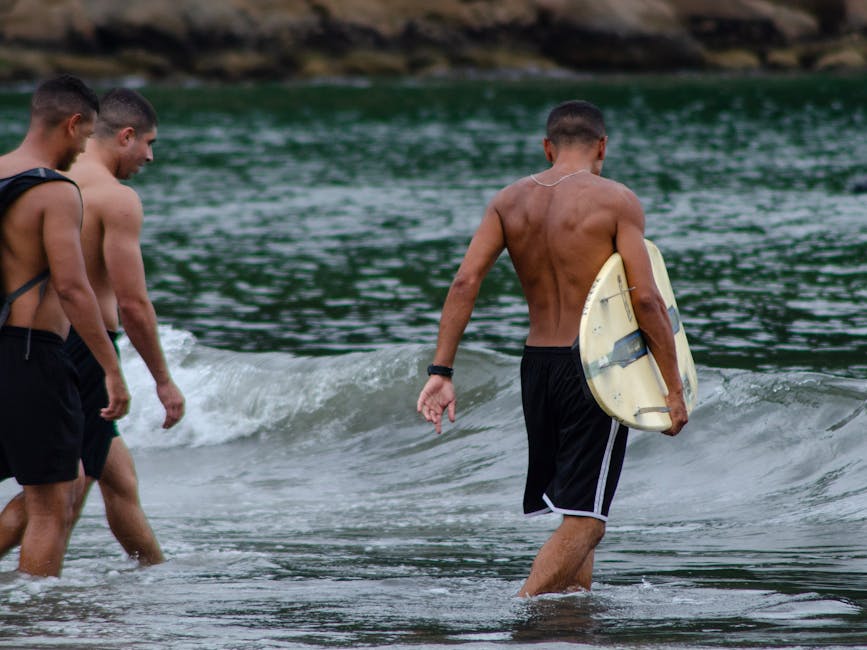
Skimboarding on the North and Baltic Sea: Spots and Gear
8 min read
On a chilly May morning on Sylt, you stand barefoot in the surf line, board under your arm, wetsuit still cool against your skin. Two steps of momentum, the board glides onto the water, you jump on and slide twenty meters across the shallow wave front. No course, no buoy, no exam. Just you, the board, and the receding wave. Skimboarding is the fastest route into Germany’s wave sports—and by 2026 it’s the stealth entry-level sport along the North and Baltic Seas.
29.04.2026
Why skimboarding is now the go-to coastal entry sport in Germany
Surfing in Germany sounds idyllic, yet it’s tough. The North Sea delivers clean surf on maybe 40 days a year; the Baltic is officially wave-starved. Kitesurfing demands a course, a licence, and plenty of beach space. Wing foiling asks for four-figure gear budgets. Skimboarding forces you to tick none of those boxes. You simply step onto your board in the shallow wash of a wave and glide. Done.
The scene is small but growing. The European surf entry can take weeks of lessons; skimboarding you can learn in three sessions. That’s why at St. Peter-Ording, Sylt and the Baltic coast more boards are popping up—especially among 20- to 35-year-olds who otherwise only surf on holiday.
Two sub-styles matter. Flatland is the Baltic staple: you sprint into a shallow puddle or the incoming shorebreak and carve slides, spins, and micro-tricks. Wave-skim is the North Sea game: you flick the board onto the outgoing backwash and ride the incoming wave once. Wave is technically trickier; flatland builds your balance in a single session.
The four best spots between the North Sea and Baltic Sea
A single spot won’t turn you into a skimboarder. You need a route that matches your experience. The four key entries on the German wave calendar lie between Sylt and Fehmarn, each delivering a different session style.
Sylt is the most exciting address because the wave at Brandenburger Strand is practically tailor-made for skimboarders when the west wind is clean. The flat run-out gives you a long glide path, and the next wave arrives early enough to ride a proper wave session. St. Peter-Ording is the relaxed starting point: its two-kilometre stretch of flat shoreline lets you pick your own puddle zone. Warnemünde and Fehmarn are pure Baltic Sea flatland—windless days with small waves between 20 and 60 centimetres deliver hours of uninterrupted sessions.
If you’re chasing swell sessions, check Windfinder forecasts and the local German surfer culture that has grown up around St. Peter-Ording. The same wind that draws kiters ashore delivers the flat, gradually flattening waves that make skimboarding possible.
Equipment 2026: What you really need
The honest truth first: you need less than a surf shop wants to sell you. A board, a wetsuit, some wax, that’s it. No leash, no fins, no helmet. The only question is which board and which wetsuit match your skill level.
The three relevant board brands are Zap from Virginia, Victoria from Florida and Exile Skimboards from California. Zap delivers the classic wood-composite entry-level board from around 200 euros. Victoria boards are slightly pricier, faster gliding and come with a dedicated flatland community. Exile is the wave brand for advanced riders – the boards are stiffer and react more aggressively to weight shifts.
Board length rule of thumb: your height minus 30 to 40 centimetres. At 180 centimetres you land on a 50 to 52 inch board. Shorter equals more agile; longer forgives balance errors. For your first purchase, go with the longer option.
With wetsuits, temperature phase is everything. May and June on the North and Baltic Seas mean water temps between 8 and 14 °C. That’s not doable in a thin suit. A 4/3 fullsuit gets you through from mid-May; for April sessions you’ll need a 5/4 with hood and booties. Brands like Xcel, Rip Curl Flashbomb or O’Neill Psycho Tech run from 220 to 450 euros.
Season, water temperature and your first three sessions
The German coast season really kicks off mid-May and runs to mid-October. April is hardcore territory. The North Sea sits at 7–9 °C, the Baltic at 6–8 °C. You can do it, but only with a 5/4 suit, hood, gloves and booties. For beginners that’s too big a barrier between fun and quitting.
The sensible entry month is May. By late May the North Sea hits 11–13 °C and the Baltic is similar. June onwards feels comfortable; August can hit 20 °C on good days, letting you ride in a 3/2 or even a shorty. Your first-session window runs from mid-May to late September.
Your first three sessions look like this: Session one is flatland. You run with a damp board, toss it ahead into a puddle or the shallow wave wash, jump on and hold your balance. No tricks expected. If you glide five metres, that’s a win. Session two adds turns – shift weight over the back edge and the board pivots. Session three tries the backwash: wait for an outgoing wave, toss the board, jump on and ride the incoming wave once. That’s when skim-rushing turns into skim-boarding.
Two safety rules always apply. Never go out alone if you don’t know the spot – North Sea currents are underestimated. And: no leash. Skimboarding works without one, and a strap fixed to your ankle can cause injury on a fall. If you lose the board it drifts in the wave; you sprint after it. No drama.
How skimboarding hones your other water sports
Skimboarding isn’t a dead end. The balance work, edge control, and reactions to uneven water translate directly into every other wave sport. Surfers use skimboards in summer as cross-training when the ocean is flat. SUP paddlers gain a sharper feel for weight shifts from skim sessions. And the wing foiler learns more about board behavior under load in two skim sessions than in an entire theory block.
By the end of your first season you’ll have: a board that sticks with you for three to five years, a wetsuit that lasts six to eight with normal care, and the ability to drop into a session anywhere along the coast from Norderney to Rügen. No boat transfers, no spot bookings, no surf camp. Just show up, slide the boardshorts under the suit, and go.
After reading this, you’ll want to get out there. That’s the whole point. Grab next Friday, load the car, and drive to Sylt, St. Peter-Ording, or Warnemünde. The coast has been waiting all winter for you to show up.
 Cool-down
Click on a question to reveal the answer.
Is skimboarding dangerous for beginners?
Which board is right for beginners?
When is skimboarding season on the North and Baltic Seas?
Which wetsuit for April and May?
Can I skimboard anywhere along the coast?
AUTHOR: Alec Chizhik View profile ›› Trail-Running Shoes 2026: The Release Wave from Hoka Mafate X to Salomon S/Lab Pulsar 3 → Mobility Training: 15 Minutes a Day That Really Changes Your Workout → London Marathon Post-Race Analysis: What Elite Splits and Title Defenders Show the Weekend Runner → Learn to Sail 2026: Earn Your Sport Boat Licence (Sea) in Four Weekends + Practical Training → 72 Hours After the Marathon: What Regeneration Research Actually Proves → 
Chief Digital Officer, Evernine ››
Translated from the German original using artificial intelligence. The German version is authoritative.