






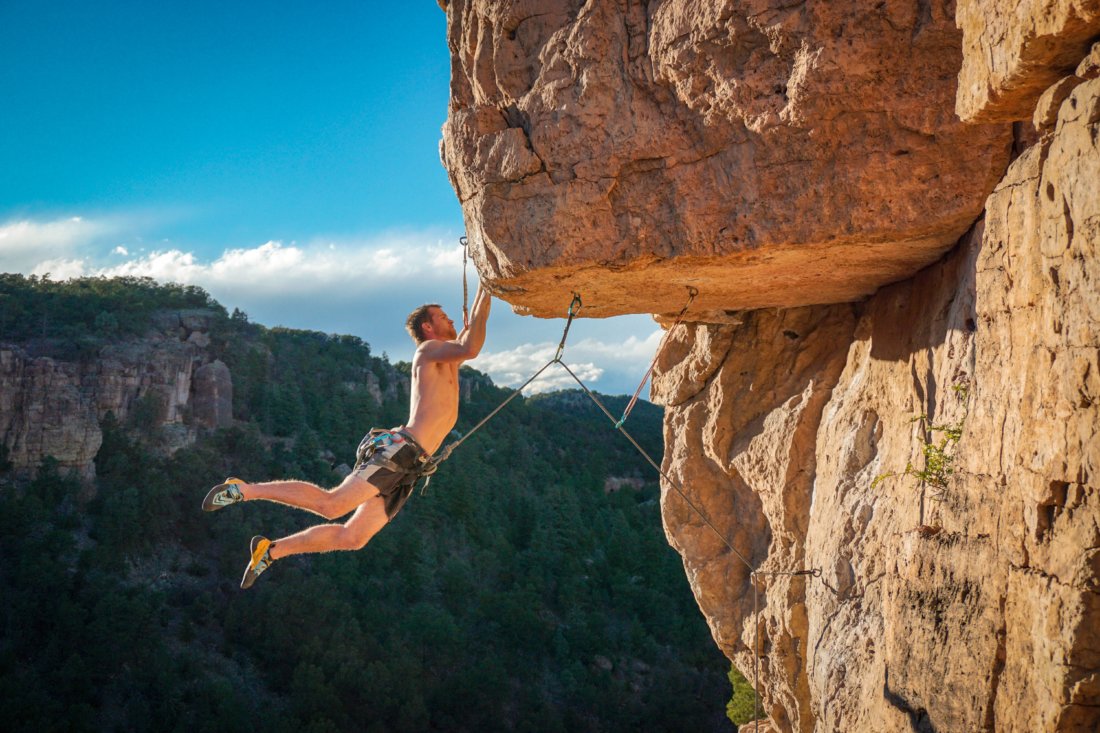
The most popular hotspots for rock climbing in Bavaria


Most people associate climbing with an indoor sport. But for those who crave more adrenaline, the great outdoors and real rock faces beckon. We reveal the best spots to climb outside in this article.
Climbing gyms are now as common as sand on a beach. They’re ideal for beginners to gain their first experience and get comfortable with heights. However, seasoned climbers tend to prefer the thrill of outdoor rock faces. The Bavarian Prealps, in particular, are a hotspot for climbers. In this article, we’ll introduce you to three top locations where you can enjoy climbing on real rock.
Bad Heilbrunn
A small town near Kochel that’s well-known in the climbing community. Beginners climbing outdoors for the first time will find plenty to enjoy here – the approach is short and straightforward. The climbing area is an old sandstone quarry, characterized by slab and friction climbing, which keeps the difficulty level in the lower grades. Even the steeper walls in the upper section are beginner-friendly.
If you prefer a quieter climbing experience, try visiting Bad Heilbrunn on a weekday. On weekends – especially in summer – the area gets busier, so you might not find the peace and quiet you’re after.
From Munich, it’s about a one-hour drive to Bad Heilbrunn.
Flintsbach
Near Rosenheim, in Flintsbach, you’ll find a large climbing area with routes for every skill level. The easiest routes fall in the 5 and 6 range, perfect for beginners looking to transition from indoor climbing to the great outdoors and gain their first experience.
More advanced climbers will feel at home on the crags known as “Steinbruch” (Quarry) and “Kuhwiese” (Cow Meadow). The routes at Steinbruch roughly match levels 6 and 7. Kuhwiese, however, is more challenging – some routes feature overhanging walls and are rated 8. The toughest of all is “Nightwisch,” which tops out at level 10.
Climbing Crags in the Trubach Valley
You don’t have to venture to the edge of the Alps to find perfect climbing spots. Franconian Switzerland has plenty to offer, too. The Trubach Valley stretches for roughly 20 kilometres, delivering outstanding climbing diversity.
For climbing enthusiasts, the areas around Obertrubach and Egloffstein are likely familiar names. This region, known for its exceptionally solid Jurassic limestone, gained significant prestige in the 1980s and remains a piece of climbing history. Alongside well-known crags like the Dachlwand, Richard-Wagner-Fels, and Stone Love, the legendary sport-climbing area Grüne Hölle is also nearby.
Experienced climbers will find their limits tested in the lower Trubach Valley. The crags here have an alpine character, and the safety setups demand expert knowledge. In the 1960s and 70s, the Egloffstein Gamswand was a popular training ground for alpine guides.
As you can see, there are plenty of opportunities to climb across the region. If you’re less experienced, always bring along seasoned climbing partners to minimise any risk of injury. Safety always comes first.
Statement

If you’re keen to start climbing, check out the German Alpine Club’s website for beginner-friendly options. Introductory courses will teach you essentials like belaying and basic techniques.
Source header image: Unplash/ Devon Dennis
YOU MIGHT ALSO LIKE THIS



Image source: Unplash/ Devon dennis
Translated from the German original using artificial intelligence. The German version is authoritative.
Also available in