






Farmer Carry Learn: Technique, Cans, 4-Week Plan
4 min read
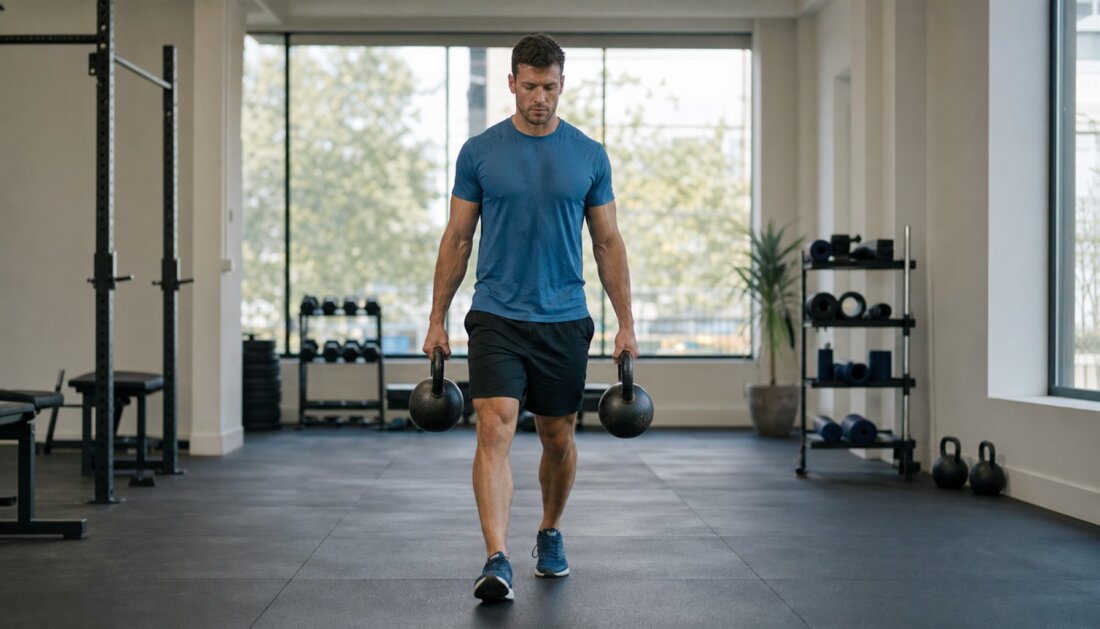
Two kettlebells, 40 meters straight ahead, shoulders down, jaw relaxed. The farmer carry looks like the most boring set in the gym and yet exposes grip, posture, and patience in under a minute.
 Short Sprint
- ▸ Farmer Carry = loaded walking with weights in your hands, upright, controlled.
- ▸ Trains: grip strength, core stability, posture under load – in one set.
- ▸ Equipment: Dumbbells, kettlebells, canisters, trap bar – clean execution is key.
- ▸ 4-week plan: distance and cleanliness first, load later.
- ▸ Frequency: 1–2 sessions per week, log load and distance – this is how you progress deliberately.
What the carry really trains
You grab heavy, stand up, and walk. Along the way, fingers, forearms, shoulders, and core must work together while the legs provide the drive. Unlike machine isolation, there’s no “only biceps” window. When your grip gives out, the set is over – honest and measurable.
In everyday life, you quickly notice the transfer: shopping crates, suitcases, child seats, tools. In sports, it pays off through longer holding work, more robust posture, and better tolerance for loaded minutes.
Setup: This is what clean looks like
Weights beside your feet, hips back, grab, stand up, shoulders down, chest open, eyes forward. Then walk: short to medium steps, feet under your body – without a waddling sprint. Breathe in rhythm with your steps and don’t hold your breath until you turn red.
Common mistakes: shrugging shoulders up to ears, arching lower back, steps too long, tilting to one side. Film yourself from the side once – embarrassing for 20 seconds, helpful for months.
Starting doses
Distance: 3–5 × 20–40 m, rest until your grip returns.
Time alternative: 3–5 × 20–40 s walking.
Load: heavy enough that the last meters challenge you, but form holds.
Equipment Options Without Excuses
Kettlebells / Dumbbells: Standard in the gym. Water jugs / filled buckets: awkward and honestly, good for home. Trap Bar: often allows more load, neutral grip, rolls less than round dumbbells. Suitcase (one side): greater lateral core engagement, reduce load.
Choose the implement you can move cleanly. Stability and tension determine the training stimulus. Start with a load you can hold for the entire distance.
Four-Week Progression
Week 1: 4× 20–30 m, moderate load, focus on posture.
Week 2: 4× 30–40 m, same load or slightly more.
Week 3: 5× 30–40 m or 4× 40–50 m.
Week 4: 1 heavy session (higher load, shorter distance) + 1 longer session (lighter load, more meters).
1–2 sessions per week are enough for most. The day after heavy carries: grip and forearms often need more time than ambition cares to admit.
When You Should Skip It
If you experience acute pain in the hand or elbow, dizziness, chest pain, or known untreated high blood pressure: stop immediately and consult a doctor. This text does not replace medical advice. Farmer Carry is simple – yet risky if form breaks down. If unsure, reduce load and shorten distance. Progress remains possible.
How to Incorporate the Carry into Your Training Plan
Place Farmer Carry at the end of your strength session or as a short standalone block after the warm-up. Plan a few clean sets and stop as soon as form breaks down. Feel free to combine with Rucking (walking with a loaded backpack) on another day.
Make it measurable: record load, distance, and how the last five meters looked. Next session either same load with more meters or same meters with slightly more load.
Tip Box
Grip Hack: Chalk or dry hands help. Even more important: set the kettlebells or dumbbells down before your fingers give out. Open blisters cost you training days.
If your grip is still clean at the end of the distance and your shoulders stay down, you’ve chosen the right dose. In the next session, increase only one variable: load or meters.
Cool-down
Click on a question to reveal the answer.
Is farmer carry the same as rucking?
How many times per week?
Distance or time – which is better?
Does this help for hybrid competitions?
What about gloves?
Read More
Learn pull-ups: 8-week plan for your first pull-up →
Dead Hang: The new favorite workout of the calisthenics scene →
HYROX at home: Water jugs instead of sled →
Image source: AI-generated (July 2026)