






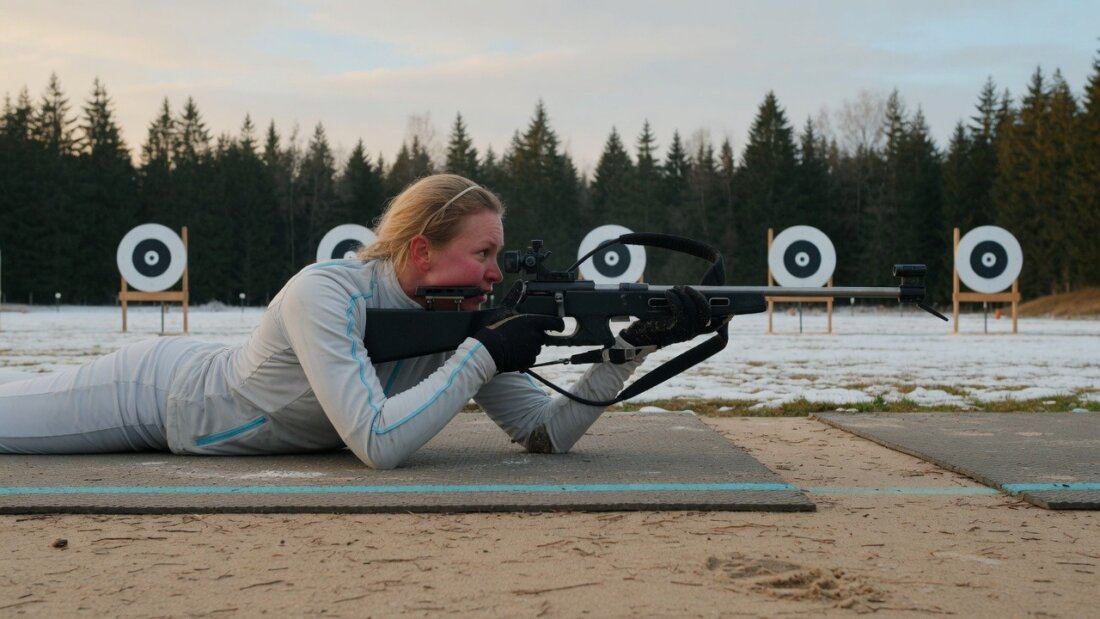
Between Two Heartbeats, Your Match is Decided

7 Min. Read
Controlling your pulse under pressure creates a calmer movement window for the decisive attempt.
 Short Sprint
- ▸ Between heartbeats, the sight stays steadier, because each contraction generates minimal movement.
- ▸ A breathing routine and low pulse create the precise window for release and technique.
- ▸ Heart rate variability (HRV) shows how quickly your body recovers from tension into controlled calm.
- ▸ With a heart rate strap and set routines, you train precision even in real pressure situations.
Olympic recurve archers release the shot in the pause between two heartbeats. This is measurable physiology with a real training effect. What you can take from this for your maximum attempt, your free throw, and the decisive race phase is right here.
In short
- Top archers fire in the interval between two heartbeats because every contraction moves the sight.
- Your HRV determines how quickly you can switch between tension and rest.
- The clicker routine creates an automated release without a conscious “now.”
- With a heart rate strap and breathing protocol, you build the same parasympathetic margin for every pressure situation.
The shot in the millisecond-narrow window
At 70 meters distance, the ten on the Olympic target is just under twelve centimeters wide. At this moment, your heart beats about 50 to 70 times per minute. Every contraction pumps blood through the body and generates a microscopic full-body movement. At a resting pulse of 55, the movement noise is significantly lower than at 85. That is exactly why top archers do not step onto the line with a pulse of 140.
The “shot between heartbeats” aims for a state where the pulse amplitude is small enough to keep the sight stable. A recurve archer works on this for years: breath, sight in the gold, holding phase, release in the interval between two beats. Anyone who releases the shot into the heartbeat risks a deviation of several millimeters at the target point. At the Olympic level, that is the difference between gold and tenth place.
Your takeaway: Your pulse is more than a fitness value. It is a precision variable. What you do to keep it low in decisive moments is simultaneously what allows you to execute more cleanly technically.
HRV: Your parasympathetic margin
Resting heart rate is only half the truth. The real metric for your regulatory capacity is heart rate variability, or HRV. It measures how much the intervals between two heartbeats differ from each other. A high HRV means your parasympathetic nervous system-the rest and recovery branch of the autonomic nervous system-is active. You can ramp up and ramp down again.
A low HRV indicates chronic stress, sleep deprivation, or high training volume without recovery. When values bottom out, clean fine motor skills simply don’t work. Archery is a pure HRV sport because the discipline rewards exactly what high variability indicates: rapid downregulation after a stressor, fine control under pressure.
The best way to measure this is in the morning via an app with HRV logging. Most modern wearables provide a usable metric. The key is comparing it against your own seven-day average, not someone else’s. A sudden drop of more than 15 percent on competition morning is a clear signal that your body is operating outside the green zone.
The clicker forces you into automaticity
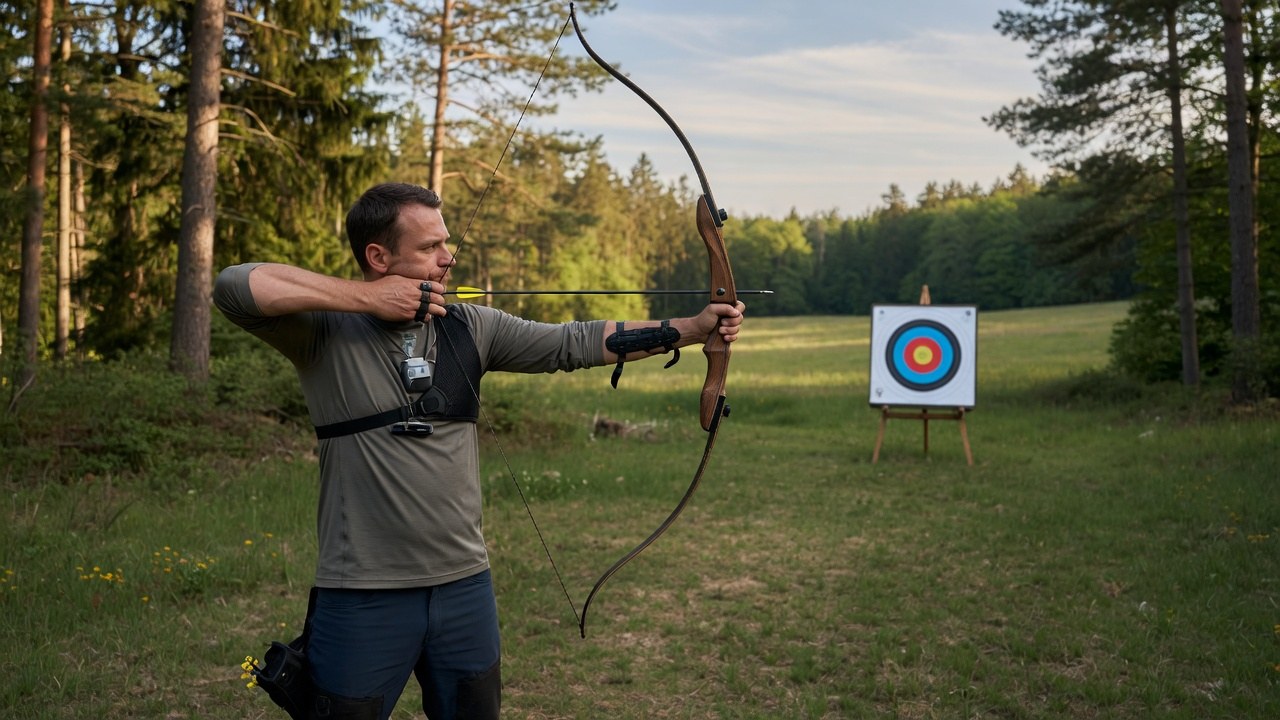
Recurve bows feature a small metal plate: the clicker. The arrow rests underneath it. When you draw fully, the arrow slides past the clicker. It snaps back and produces a metallic click. In that moment, you release. Without thinking, without hesitating.
This is exactly where the trick lies. The trigger is not a conscious decision. The clicker targets your brain like a reflex. Anyone who consciously triggers the shot “now” draws the bow erratically, because decision latency pushes the muscles into micro-tension. Those who wait for the click and then let it flow achieve a clean, reproducible release.
For you as an amateur athlete, this means: in your decisive actions, you need a predetermined trigger. Conscious start-point decisions cost time and clean execution. The start point of the upward movement in a deadlift is such a trigger. The ball release on a free throw is one. The starting push on a climb is one. Whatever you do, shift the trigger into a routine. On-the-spot decisions are more error-prone and generate additional cognitive noise in the nervous system.
Don’t lose your form under pressure
If you watch two archers in an Olympic final, one thing stands out. Every shot looks identical. Whether it’s a 6:6 tie or a 0:6 deficit, the breathing rhythm remains, the setup phase remains, the hold time remains. Olympic archers train specifically for this: ensuring that pressure does not bleed into their form.
This only works with a fixed routine that is checked off multiple times per shot. A typical protocol: breathe in deeply, exhale to residual volume, set the sight, full tension, click, follow-through, release breath. This sequence acts as a safeguard against the natural tendency to become faster, shorter, and shallower under pressure.
What happens when you abandon your routine under pressure? Your breathing becomes shallower, your parasympathetic nervous system fades, your heart rate spikes, your fine motor skills collapse. You know this from your own experience: the decisive attempt suddenly looks different from the warm-up. This exact drift is the problem. The Olympic lesson reads: under pressure, do less, not more. The same routine as in relaxed training, only now it counts.
What you transfer to your max, free throw, and race peak
The most obvious transfer is the max attempt in strength training. A heavy deadlift or squat max benefits enormously from a clean breathing and release routine. You brace, build core pressure, grip the bar, and lift off-without renegotiating in between. Every extra thought costs you percentage points.
At the free throw line, the parallel is almost one-to-one. You stand at the line, run through your routine, bring the ball to head level, bend your knees, go. Guiding the shooting hand longer under pressure or altering your wrist costs precision. Stick to your routine, whether it’s game-deciding or in the Warm-up.
In the decisive race phase of a run or a cycling race, it comes down to something else. Here, it’s about short parasympathetic windows between hard phases. You can use the archers’ technique of a short exhale before exertion on a hill: exhale for three seconds, drop your pulse a notch, then attack. This works especially well for tactical accelerations, less so for pure maximum loads.
Dry training with a heart rate strap and wearable
You don’t need a bow for these exercises. You need a heart rate strap or a wearable with a real-time display, plus a quiet corner. The idea: simulate a pressure situation, watch your pulse, and practice downregulation in seconds.
Exercise 1: Breathing pre-load. Do 20 squats in quick succession until your pulse visibly rises. Then sit down, look at the display, and breathe in for four seconds, out for six seconds-ten times. Watch how fast your pulse drops. After two weeks, you’ll notice downregulation working noticeably faster.
Exercise 2: Stability holding pressure. Take a light barbell or a broomstick, hold it at chest height, and fix your gaze on a point on the wall. Watch your pulse. Your goal is to feel how fine muscle work nudges your pulse up slightly. You learn which movements calm your system and which ramp it up.
Exercise 3: Clicker simulation. Transfer the release principle to an exercise of your choice. For push-ups: hold for one second, then an explosive return. For a throw: a clear three-second routine, then release. The key lies in the consistent sequence. Maximum intensity is secondary.
How to tackle it
- Establish a baseline. Wear your wearable for a week, logging morning HRV and resting pulse. You need your personal average before changing anything.
- Build a breathing routine. Four seconds in, six seconds out, ten times, before every session. This becomes your standard protocol for every effort.
- Define your release. Choose one of your key actions and define the clear starting point where you trigger without renegotiating. Max attempt, free throw, sprint start.
- Simulate pressure. Build in a controlled load once a week that drives your pulse up, followed immediately by downregulation on your wearable.
- Test your routine under pressure. Use your next hard training session or test to stick to your routine consistently. What counts is the consistency of execution, not the result.
- Monitor your HRV trend. If your overnight value drops sharply, dial down the intensity. High precision only works with sufficient parasympathetic margin.
Frequently Asked Questions
Do I really need to see my heart rate in real time?
It helps immensely at first, because otherwise you won’t learn what downregulation actually feels like. After three to four months, you’ll need the display less often, as your body has internalized the signal.
Is a wristwatch enough, or do I need a chest strap?
For tracking trends, a good optical watch is sufficient. For real-time exercises under load, a chest strap is more precise and responds faster. If you’re serious about it, the strap is worth the investment.
What if my HRV is generally low?
First, check your habits: are you getting enough sleep, did you drink alcohol the night before, or are you training hard without recovery? Usually, a low reading is a lifestyle issue, not a genetic curse. Over the course of a few weeks, you can noticeably raise your HRV.
Does this help with endurance sports too, or only with precision-based activities?
Both. In endurance sports, brief downregulation between intensity peaks is tactically valuable. In precision disciplines, it’s the prerequisite for clean execution.
Conclusion
Olympic archery shows you in its purest form how your heart rate dictates your performance. The real takeaway: you can train your parasympathetic control like a muscle. You don’t need a bow for that. A set breathing routine, a clear trigger, and consistent HRV monitoring will transform your precision and your pressure resilience in any sport. Start with the basics and measure consistently. Your numbers will speak for themselves in just a few weeks.
Cool-down
Click on a question to expand the answer.
Why does your heartbeat affect precision?
How do I train the quiet window?
Does this also help outside of archery?

IBS Publishing Editorial Team ››
Trail Running Shoes 2026: The Release Wave from Hoka Mafate X to Salomon S/Lab Pulsar 3 →
London Marathon Post-Race Analysis: What Elite Splits and Defending Champions Show Recreational Runners →
Learning to Sail 2026: Get Your Sportbootführerschein See + Practical Experience in Four Weekends →
72 Hours After the Marathon: What Recovery Research Actually Proves →
London Marathon 2026 Today: Elite Field, Weather, and What Counts →
Image source: Title and article images AI-generated (May 2026)