






Climbing World Cup Innsbruck: 3 Lessons for Your Wall
5 Min. Reading Time
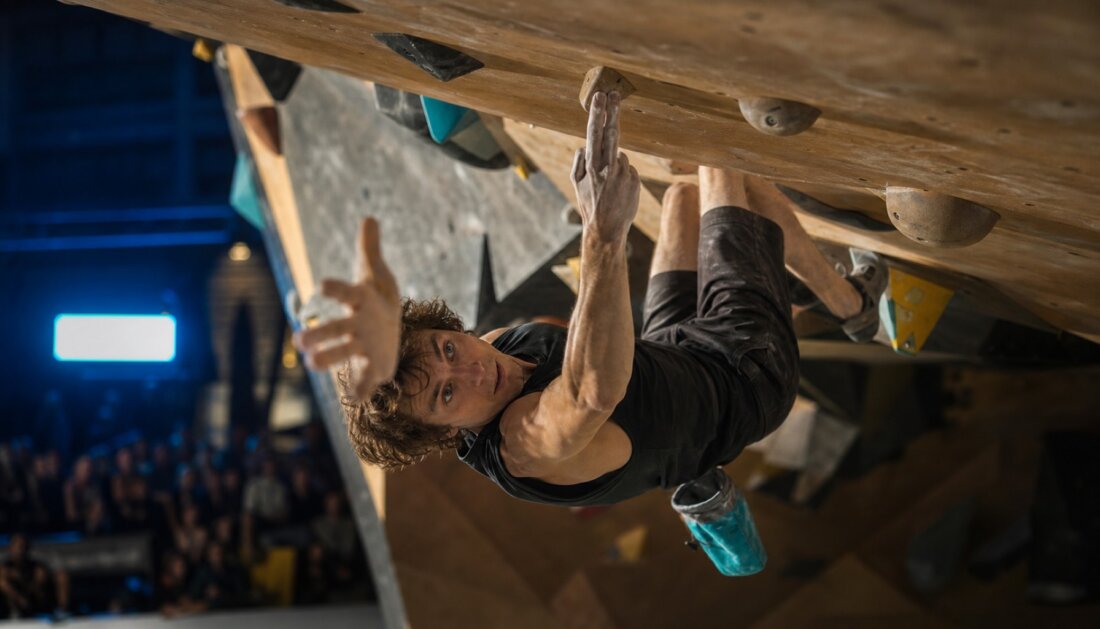
In Innsbruck a climber hangs upside‑down by two fingers, about four and a half metres above the mat, while the clock ticks. This week the world’s best are competing in the climbing World Cup in Innsbruck in bouldering and lead, with the lead finals taking place this weekend. You don’t have to become as strong as those athletes. Three things they do cleanly on the wall will already help you the next indoor session.
 Quick Sprint
- ▸ World Cup in Innsbruck: The world’s best compete in bouldering and lead, with the lead finals taking place this weekend at the climbing centre.
- ▸ Read before you grab. Pros map the whole route in their head before they touch the wall. That alone saves you strength.
- ▸ Precision beats power. The best moves look slow and effortless because no energy is wasted.
- ▸ The head lasts longer than the fingers. Under competition pressure, composure decides, not maximal strength.
- ▸ All transferable. None of these three lessons cost you training, only attention on the next attempt.
Why Innsbruck Matters Now
Innsbruck is one of those places where climbing doesn’t feel like a niche activity. During the World Cup of the international federation, which will run under the name World Climbing Series in 2026, the best athletes compete in two disciplines. In bouldering, it’s about short, extremely difficult problems without a rope, on a wall that’s about 4.5 meters high. In lead climbing, they climb a significantly higher route with a rope, under a time limit, as high as possible, until their strength runs out or their grip fails.
The lead climbing finals are taking place this weekend. If you watch the livestream, you won’t see a classic strength sport, but rather a mix of chess and gymnastics. That’s exactly why it’s worth watching, even for people who only boulder in the gym. The three levers you’ll see have little to do with maximum strength. If you’re just starting out with bouldering, you’ll get the most out of it here.
Lesson 1: Read Before You Grab
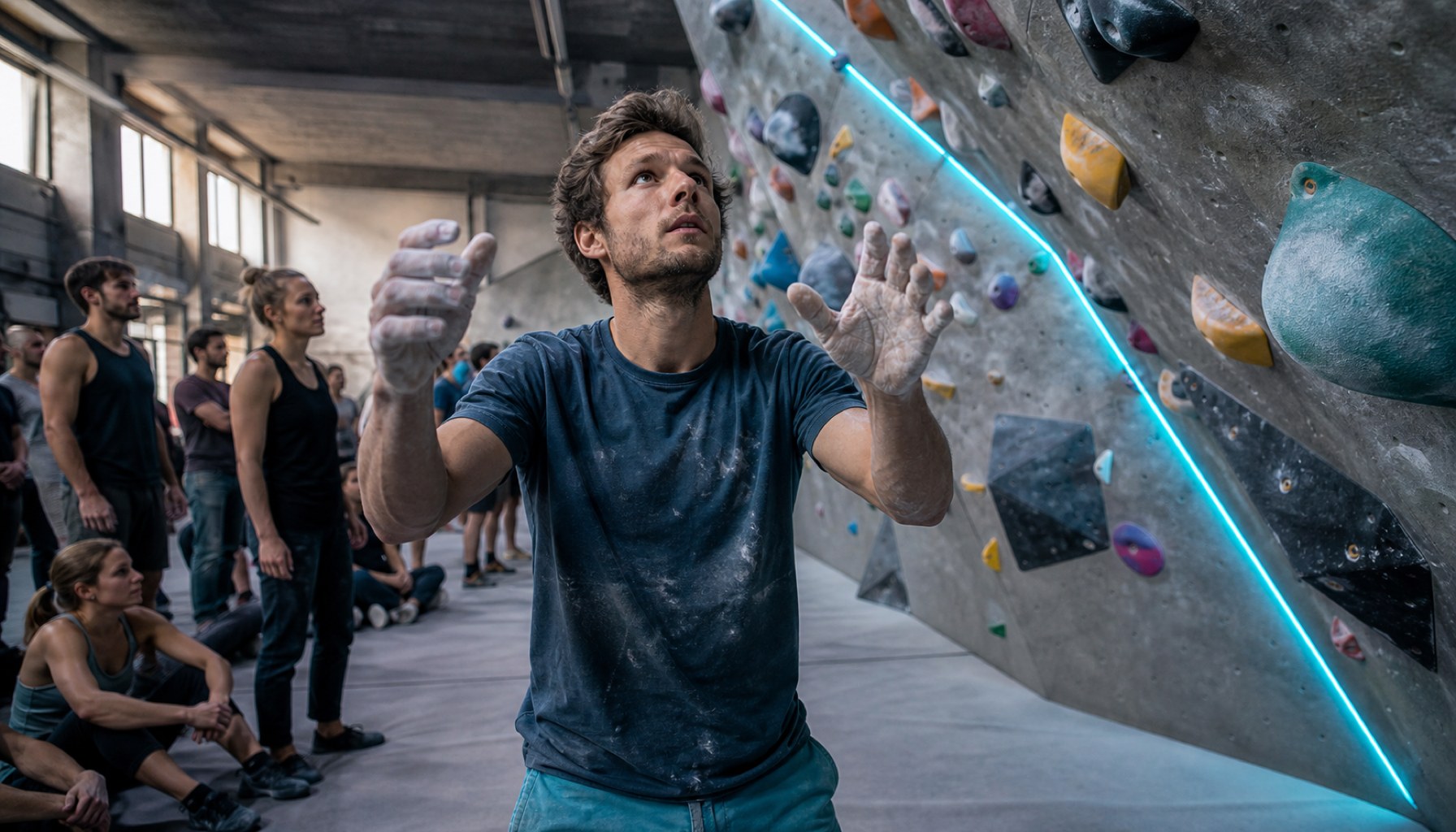
Before a boulderer touches the wall, they stand in front of it for minutes, gesturing with their hands in the air. This looks strange from the outside, but it’s the most important part. They plan every move, every foot position, every weight shift in their head before they start. In competition, there’s no second chance to try out the route. If you only think about it at the wall, you’ll lose strength at points where you should just be cruising.
For you in the gym, that means: don’t jump right in. Look at the boulder from below, think about the sequence of holds and especially where your feet belong. Most beginners climb with their arms and forget their legs. Pros do it the other way around. How much technique beats raw strength shows when you look at what movement-scoring apps measure about your movement.
Lesson 2: Conserve Energy Before It Gets Steep
Watch the movement of the top athletes during the finals. It looks calm, almost casual. That’s exactly where the work lies: no unnecessary movement, no stiffening, no pulling where a clean shift is enough. Every movement saved is energy saved, and at the end of a long lead route, it’s exactly this reserve that decides the last meters.
Beginners often do the opposite. They grip too tightly, hold their breath, and pull themselves up with force. That costs double: first the wasted energy, then the pump in the forearm that comes too early. If you grip more loosely and work more with your legs, you’ll suddenly climb routes that previously seemed impossible.
Lesson 3: Stay Calm When Your Fingers Are on Fire
In the final, an athlete stands alone on the wall, with thousands watching, and the decisive move is a jump to a grip he’s not sure he’ll catch. More strength won’t solve this moment. What’s crucial is whether he remains calm when his pulse spikes. Anyone who hesitates, stiffens, and falls.
This mental component is the most underestimated part of climbing, and it can be practiced. The key is controlled habituation: You deliberately seek out situations that command your respect and practice staying calm, rather than just talking yourself out of fear. A consciously chosen, slightly too difficult move in the gym trains your mind more than ten easy boulders. Those looking for the difference between the gym and real rock can find it by comparing trad and sport climbing.
Cool-down
Click a question to expand the answer.
What is the difference between bouldering and lead?
Does watching really help my own climbing?
Do I need to be strong to start climbing?
Where can I follow the World Cup?
How do I train the mental side concretely?

Editorial IBS Publishing ››
Bouldering for Beginners: Technique Beats Strength →
Bouldering with AI Coach: What Movement-Scoring Apps Can Do →
Climbing: Trad vs. Sport and What Your Body Learns →
Image source: Titelbild und Beitragsbilder AI-generated (June 2026), C2PA-Zertifikat im Bild hinterlegt
Translated from the German original using artificial intelligence. The German version is authoritative.