







Comrades Marathon 2026: What to Know Before the Start
6 min read
On 14 June 2026, around 20,000 runners will tackle 85.777 kilometres of relentless uphill running from Durban to Pietermaritzburg. With a 12-hour time limit, five gruelling climbs and a myth stretching back nearly a century, the Comrades Marathon is back. Here’s what’s new for 2026-and what you can take away for your next long run.
29 May 2026
Why the Up Run is considered the tougher challenge
The Comrades changes direction every year. In 2026 it’s an Up Run, meaning the start is at sea level in Durban and the finish sits at around 680 metres in Pietermaritzburg. Net gain: all uphill-and that’s what makes this version the one runners fear. Every metre of elevation costs you leg strength you’ll desperately need for the final sprint to the line.
The official distance of 85.777 kilometres is the shortest Up Run course in recent history. The reason is mundane: roadworks in KwaZulu-Natal forced a reroute. Yet anyone who knows the Comrades knows that shaving a few hundred metres here and there doesn’t change the climbs themselves.
Compared with a classic city marathon, this is a different sport entirely. Where a marathon is about pacing, the Up Run is about sustained power uphill for hour after hour. You get a similar sense of how long, steady effort reshapes the body from the endurance training of Le Mans factory drivers, who must keep going for 24 hours straight.
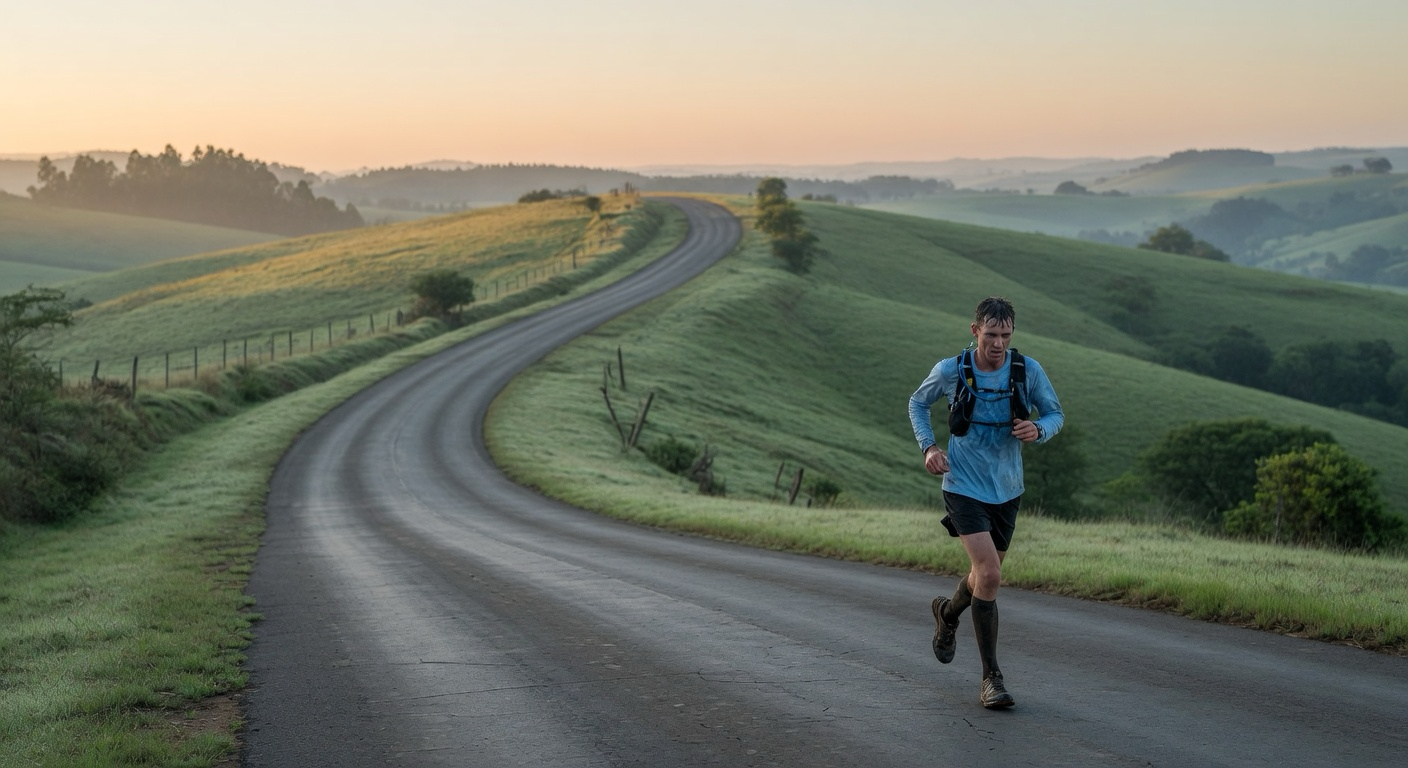
The five decisive climbs that decide the race
In the Up Run, everyone talks about the Big Five. These are the five climbs that separate contenders from also-rans, and they arrive in an order designed to break your spirit.
- Cowies Hill shows up early and looks harmless, yet it drains you if you go out too fast.
- Fields Hill is the first real monster-a long, steep pull that overwhelms inexperienced runners immediately.
- Botha’s Hill grinds on and lands right where the first doubts creep in.
- Inchanga appears around halfway and is the most scenic yet most wearing ascent of them all.
- Polly Shortts is the final boss just outside Pietermaritzburg, the hill where runners every year grind to a walk.
If you’re planning to run the Comrades, you don’t plan in kilometre splits; you plan in climbs. That’s where data-driven training helps: keep your intensity dialled precisely and you’ll still have something left for Polly Shortts. For a deeper look at how to hit your zones, see our piece on personalised Zone-2 training.
What’s new for 2026
For the 99th edition the organisers have tweaked the format. There’s a revised start time, a three-wave start and a reworked cut-off system. Behind the dry wording lies a real issue: with roughly 20,000 starters, it takes minutes before the back rows even cross the line. The wave system aims to ease the bottleneck and ensure the cut-off times apply fairly to everyone.
The twelve-hour limit remains the beating heart of the race. Anyone not inside the final arch after twelve hours is recorded as DNF, no matter how close they are. That unforgiving rule is part of the legend. It forces every runner to respect pacing instead of banking on a perfect day.
What German runners take away from Comrades
You don’t need to fly to South Africa to learn from the Comrades Marathon. Three lessons translate directly to every long run.
First: running uphill is its own skill. If your local loop is flat, seek out climbs or crank the treadmill’s incline. Second: heat is a factor. The Comrades starts in the South African winter, yet the open-road sun is still brutal, and heat management decides the final hours. Third: recovery is part of the plan, not an afterthought. How deeply sleep and regeneration fuel performance is laid out in our overview on Recovery with Wearables.
The Comrades isn’t a race to be taken lightly. Yet as a long-term target it reshapes how you think about covering distance. Sometimes that shift alone is enough to tackle the next long run differently.
 Cool-down
Click on a question to reveal the answer.
When is the Comrades Marathon 2026?
How long is the course?
Why is the Up Run considered harder?
Can recreational runners even enter?
How should I prepare for the climbs?

Transvulcania 2026: How David Sinclair smashed the course record →
Zone 2 personalised: What FatMax and VT1 teach your plan →
Sleep and recovery: How wearables steer your training →
HYROX Doubles in Tempelhof: Lessons from the final pairs →
Le Mans 2026: How factory drivers train for 24 hours →
Featured image source: Pexels / RUN 4 FFWPU (px:10313668)
Image in article: AI-generated (May 2026)