






Tennis 2026: Smart Courts, TikTok and the Comeback

6 Min. Read Time
67 percent of tennis viewers on social media are under 35. Smart Courts make Hawk-Eye affordable for amateurs. And the ATP has increased its social followers by 13.5 percent – with content that looks like TikTok, not Wimbledon. Tennis is experiencing a comeback in 2026 that nobody saw coming.
Why Tennis is Suddenly Cool Again
Tennis used to have an image problem. White clothing, strict rules, expensive clubs, and silent spectators. A sport that seemed to actively try to keep young people away. And then something happened: The ATP partnered with Overtime – a media company known for basketball TikToks. The result: 80 million views, 13.5% more followers, and over half of the audience were new fans.
The trick was simple: Instead of stiff tournament highlights, they showed players joking, training, and doing challenge videos. Suddenly, tennis pros weren’t unreachable athletes on sacred grass, but people with humor. Carlos Alcaraz in a trick shot battle. Iga Swiatek doing karaoke. Jannik Sinner cooking. Tennis became human – and thus shareable.
Smart Courts: Hawk-Eye for Your Club
For years, line-calling technology was a privilege of the Grand Slams. That changed in 2026. Smart Court systems use simple camera setups that are affordable for local clubs. You play your match, the cameras track the ball, and at the end, you get: automatic line-calling, a video recording of your game, and statistics on your shot accuracy.
Why this matters: Firstly, it eliminates disputes over line calls – the biggest annoyance in amateur tennis. Secondly, it makes your game analyzable. And thirdly – and this is the TikTok effect – it makes tennis shareable. You can post your winner from the third set to your story. Just like in golf or Padel: What can be shared, grows.
The Connected Racket Revolution
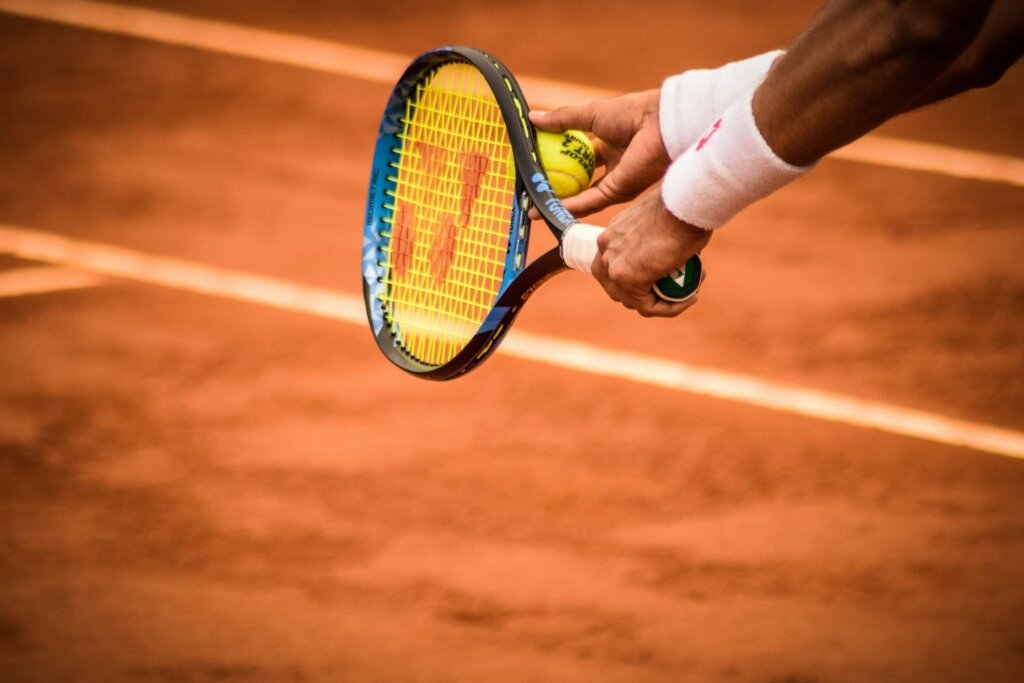
The next game-changer is called Connected Racket. Sensors in the grip measure swing speed, ball spin, impact point, and even the vibration of the frame. All in real-time, all on your phone. What was previously only possible with a private coach and a high-speed camera is now in a 200-Euro sensor.
For beginners, this means: You see immediately whether you hit the ball centrally or on the frame. Whether your serve has enough spin. Whether your forehand is getting faster or stagnating. And for advanced players, it opens up a world of data analysis that was previously reserved for pros. The effect on motivation is enormous – progress becomes measurable, and measurable progress keeps you on the ball.
Source: ATP/Overtime Partnership Report, YSBR 2026
Getting Started in 2026: Easier Than You Think
Haven’t held a racket since gym class? No problem. Tennis in 2026 has more beginner-friendly options than ever:
Cardio Tennis: Group workout on the court. More about movement than technique, music plays, all levels welcome. No match pressure, no scorekeeping. Available in many German cities for 10-15 Euro per session.
Fast4 Tennis: Shortened matches – four games to win instead of six, no advantage, tiebreak at 3:3. A match lasts 30-45 minutes instead of two hours. Perfect for busy professionals with limited time.
Racket Sharing: Many clubs and public courts offer rental rackets. You don’t need a 300-Euro setup to try it out. Tennis shoes and a T-shirt are enough.
YouTube as Coach: Channels like Essential Tennis, Top Tennis Training, and Intuitive Tennis have millions of subscribers and offer free technique tutorials that are better than some club coaches. Combined with a Connected Racket, you have a virtual coach for zero Euro.
Editorial Take
What You Need to Get Started This Week
- Racket: For beginners, an all-around racket between 80 and 150 Euro is sufficient (Wilson Clash, Head Speed, Babolat Pure Drive in the beginner version). Lighter is better than heavier.
- Shoes: Tennis-specific shoes with lateral stability. Running shoes won’t work – the sole is too soft for side-to-side movements.
- Court: Public courts in parks (often free), club courts (guest play for 5-15 Euro/hour), or indoor courts in winter (15-25 Euro).
- Partner: Tennis requires at least two players. Ask around among friends, check out local tennis apps like Playtomic, or attend a Cardio Tennis session – that’s a great way to meet people right away.
- Optional: Connected Racket Sensor (from 200 Euro) or Smart Court Session at an equipped club.
Conclusion
Tennis in 2026 is not your parents’ sport. It’s faster, more accessible, more technological, and more social than ever. The combination of social media, Smart Courts, and a generational change among the stars has led to tennis’ comeback from an elite niche sport to mainstream. If you’re looking for a sport that offers cardio, tactics, social interaction, and outdoor training in one – and that you can start with just one friend and a rental racket – then now is the right moment.
 Cool-down
Click a question to reveal the answer.
Is tennis better than padel?
How often should I play tennis per week?
Do I need a coach?
What does tennis cost per month?
Is tennis gentle on the joints?
Source title image: Pexels / cottonbro studio (px:5739200)