






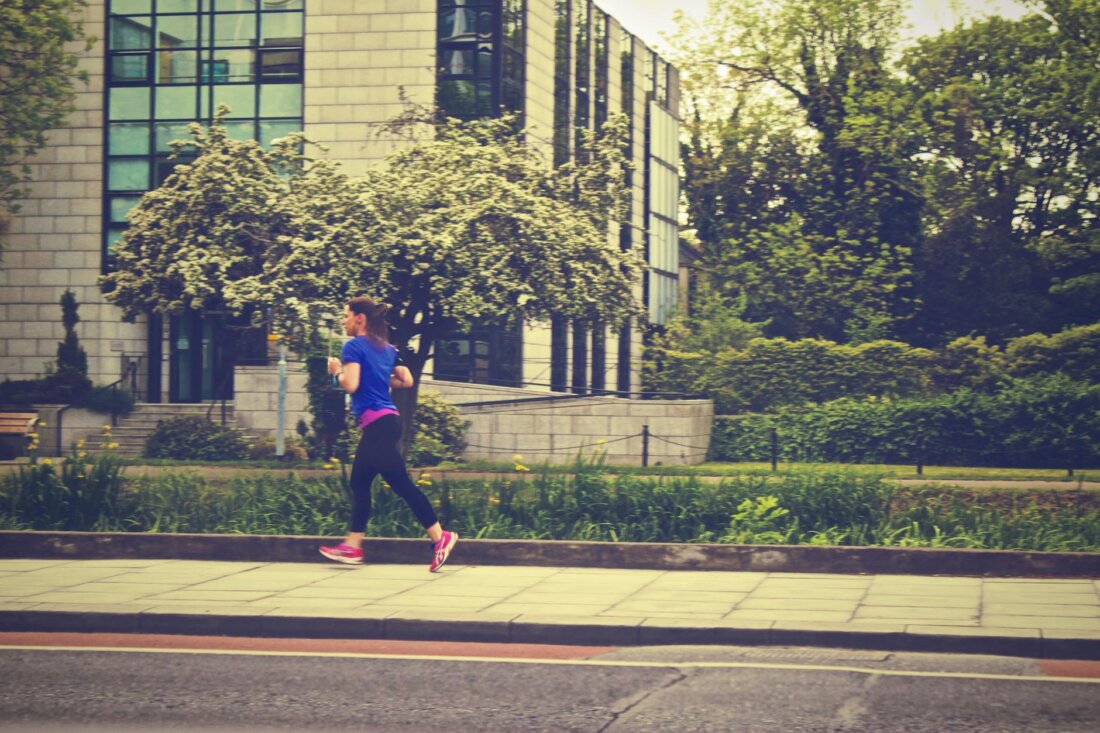
Spring Fitness 2026: How to Kick Off the New Sports Season

5 min Reading Time
First sunny day, 14°C, light breeze. You’re standing at the window thinking: Today. Millions of Germans have this exact moment simultaneously in March. Most then make one critical mistake: they sprint off as if winter never happened. Four weeks later, they’re sitting in an orthopaedist’s office. It doesn’t have to be that way.
Ease Back In: Returning After Winter
The most common spring mistake has a name: ego. After weeks on the couch, you jump back in at last October’s pace and volume. Your muscles keep up – but your tendons, ligaments, and cartilage don’t. They adapt three to five times slower than muscle tissue.
The result? Knee pain by week two, shin splints by week three, Achilles discomfort if you push through. No training deficit in the world is worth that.
Rule of thumb: 60% of your autumn volume, 70% of your intensity. First two weeks: no interval training, no runs over 60 minutes, no strength work to failure. Increase using the 10% rule: maximum 10% more volume or intensity per week – not both at once. If you’re unsure whether HIIT or steady-state cardio is the better starting point, choose steady state. HIIT can wait until week four at the earliest.
If you spent the entire winter completely inactive – no gym, no winter sports, nothing – start at 40-50%. It’ll feel absurdly easy. That’s exactly how it should feel.
The Best Spring Sports for Getting Back into Shape
Running remains the classic. Shoes on, door open, go. No subscription, no class schedules, no equipment required. For beginners: try the walk-run method – 3 minutes jogging, 1 minute walking, repeated for 30 minutes total. If you can hold a conversation without gasping, your pace is spot-on. For those serious about it: running groups are everywhere in 2026. Many sports shops now host free “Run Days.” Pair it with light strength training for optimal results.
Cycling is gentler on the joints than running – and ideal after injury-related breaks. The 2026 trend? Gravel bikes. Road and gravel, no fixed path, maximum freedom. Don’t want to buy? Many cities now offer robust bike-sharing systems featuring performance-oriented models. Pro tip: Keep your first ride under 45 minutes and stick to flat terrain.
Outdoor yoga is the perfect complement to endurance training – boosting mobility, core stability, and recovery all at once. From April through September, most cities host free park-based sessions. No prior experience needed; just bring your mat. For more ideas on studio-free workouts, check out our Outdoor Fitness Guide. Especially valuable in spring: Sun Salutation flows get your circulation moving and stretch tight hip flexors stiffened by winter.
Hiking and trail walking are massively underestimated. A three-hour hike with 400 metres of elevation gain burns 700-900 kcal – and thanks to uneven terrain, it’s easier on your joints than pavement running. Ideal for anyone wanting to combine re-entry with nature immersion. Bring trekking poles: they reduce knee load downhill by up to 25%.
Swimming is the quiet favourite among physiotherapists – zero joint impact, full-body activation. Outdoor pools open in April; many lakes become swim-friendly from May onward. Beginners: aim for 20 minutes of freestyle or breaststroke – pace doesn’t matter. Just get in the water.
Gear Check: What Stays, What Goes?
Equipment that was top-tier in October may be done for by March. Running shoes lose cushioning after 800 km. Most runners don’t track mileage – and then wonder why their knees ache.
Running shoes: Inspect the sole and heel counter. If the midsole shows visible compression – or you’ve logged over 800 km – it’s time for new ones. Non-negotiable.
Bicycle: Service before your first ride. Brakes, chain, gear shifters, tyre pressure – all need checking. Especially after winter storage in the basement: tyres can become porous, brake pads may glaze over.
Technical apparel: Spring calls for layering. Mornings at 5°C, afternoons at 15°C. A lightweight wind jacket that packs into your pocket is worth more in spring than any high-end thermal layer.
Setting a Season Goal: Why a Summer Event Changes Everything
Athletes with a concrete seasonal goal stick with training twice as long as those who simply say, “I’ll get back into it.” A goal gives purpose to every session. It makes getting up Saturday morning easier – and skipping harder.
Great goals for different levels:
- Beginners: Parkrun (5K, every Saturday, free, worldwide) or a local fun run in May/June. Zero pressure, maximum community.
- Returning athletes: A half-marathon this autumn. Starting your training now gives you six months to prepare – or a 100-km cycling marathon this summer.
- Experienced athletes: A sprint triathlon (750 m swim / 20 km bike / 5 km run) or an autumn trail-running event. New discipline, fresh motivation.
“Sign up – and pay – when your motivation is highest. That commitment holds strong even when motivation dips in May.”
Recovery: The Underrated Game-Changer
Everyone wants to hit the gas in spring. The best athletes consciously ease off. After winter, your body ramps up systems that ran on low flame for months: thermoregulation, sweat production, vitamin D synthesis. That takes energy – energy you can’t divert to training.
Sleep is the most powerful recovery tool – and it’s free. Aim for 7-9 hours in a dark room, with no screens for at least an hour before bed. Sounds simple. Almost nobody does it consistently.
Nutrition needs a post-winter reset: more protein for muscle building (1.6-2.0 g per kg of body weight), more water than you think you need (yes – even at 15°C, you sweat during exercise), plus fruit and vegetables to replenish micronutrients depleted over winter. For a detailed breakdown, see our Sports Nutrition Guide.
Active recovery: Light movement on rest days – walking, easy swimming, mobility work – speeds up recovery far more than complete inactivity. Your body needs blood flow – not stillness.
 Cool-down
Click any question to reveal the answer.
How do I restart sports after winter?
Which sport is ideal for a spring restart?
Do I need new running shoes after winter?
How do I stay motivated?
When will I notice progress?
Header Image Source: Pexels / Picography
Translated from the German original using artificial intelligence. The German version is authoritative.