






From Tunnel to Sky: How Indoor Skydiving Transformed My Aerial Skills
Twelve months ago, I wrote about my first tandem skydive over the Bavarian Alps. Since then, I’ve completed my AFF licence (7 levels + 25 solo jumps) and logged another 12 hours in the wind tunnel at FlyStation Munich. This article is about how these two paths – tunnel and sky – complement each other in ways I didn’t expect.
The AFF Journey
Accelerated Freefall (AFF) is the standard solo skydiving course in Europe. Seven levels, each with increasing complexity: stable exits, turns, tracking, and eventually flying with other people. Most students take 15-25 jumps to pass all levels. I passed in 8 – not because I’m talented, but because FlyStation gave me a head start that’s hard to overstate.
What the Tunnel Teaches You
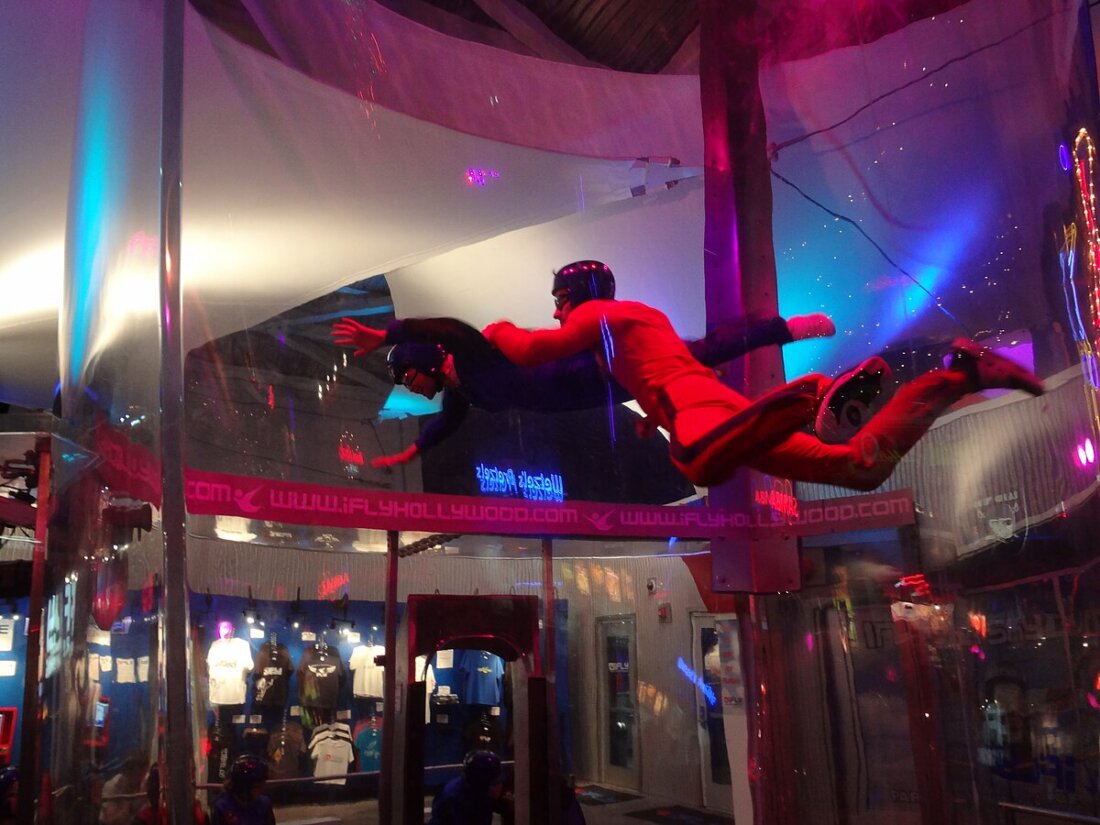
In a wind tunnel, you get 2-4 minutes of continuous flight time per session. In skydiving, you get 60 seconds of freefall per jump. Simple maths: one 4-minute tunnel session equals the freefall time of four skydives – without the plane ride, the stress, or the 250 EUR per jump price tag.
But it’s not just about time. The tunnel is a controlled environment where you can practice specific movements repeatedly. Want to nail your 360-degree turns? In the tunnel, you can do 50 in a row. In the sky, you get maybe two per jump before it’s time to pull.
At FlyStation, my coach Max structured my training around the AFF curriculum. We worked on stability, heading control, altitude awareness (maintaining height in the tunnel translates directly to altitude management in freefall), and emergency procedures. By the time I did AFF Level 1, the body position felt completely natural.
Where the Sky Is Different
The tunnel doesn’t prepare you for everything. The exit from the aircraft – the door opening, the wind blast, the first second of tumbling – is something you can only learn in the sky. The altitude awareness (checking your altimeter while flying) requires real practice. And the emotional management – staying calm at 4,000 metres with nothing between you and the ground – that’s uniquely a sky skill.
The canopy work (steering, landing) is also entirely separate. After freefall, you’re under a 25m² parachute navigating wind patterns and landing approaches. This requires ground training and practice jumps, not tunnel time.
The Cost Comparison
Let me be transparent about costs, because this matters:
AFF Course: ~2,800 EUR (7 levels + equipment rental + coaching)
25 additional jumps to licence: ~3,750 EUR (150 EUR/jump average)
15 hours tunnel time at FlyStation: ~2,400 EUR (block rates)
Total to reach my current level: ~9,000 EUR over 12 months
Without tunnel training, most people need 80-100 jumps to reach the same skill level. That’s an extra 5,000-8,000 EUR in jump tickets alone. The tunnel literally pays for itself in saved jump costs.
What’s Next
I’m training towards my B-licence (200 jumps) and working on head-down flying in the tunnel. The progression never stops – there’s always a new body position, a new discipline, a new challenge. And FlyStation remains my weekly training ground, rain or shine.
Frequently Asked Questions
How many tunnel hours do you need before starting AFF?
Even 30 minutes (about 3-4 sessions) makes a noticeable difference. For maximum benefit, aim for 2-3 hours of tunnel time before your first AFF level. Focus on belly flying stability, turns, and forward/backward movement. Your AFF instructors will notice the difference immediately.
Can you skip AFF levels with tunnel experience?
No – AFF progression is standardised and every student must complete all 7 levels regardless of prior experience. However, tunnel experience typically means you pass each level on the first attempt rather than needing repeats, which saves both time and money. Some drop zones offer a “tunnel to first jump” pathway that streamlines the ground school portion.
Is the wind tunnel identical to real freefall?
About 90% identical in terms of body position and aerodynamics. The main differences: in the sky, the airflow is slightly turbulent (not laminar like a tunnel), you’re dealing with changing air density as you fall, and the psychological factors are completely different. The muscle memory and body awareness, however, transfer almost perfectly.
Image source: Wikimedia Commons / iFLY Hollywood (CC BY 2.0)