






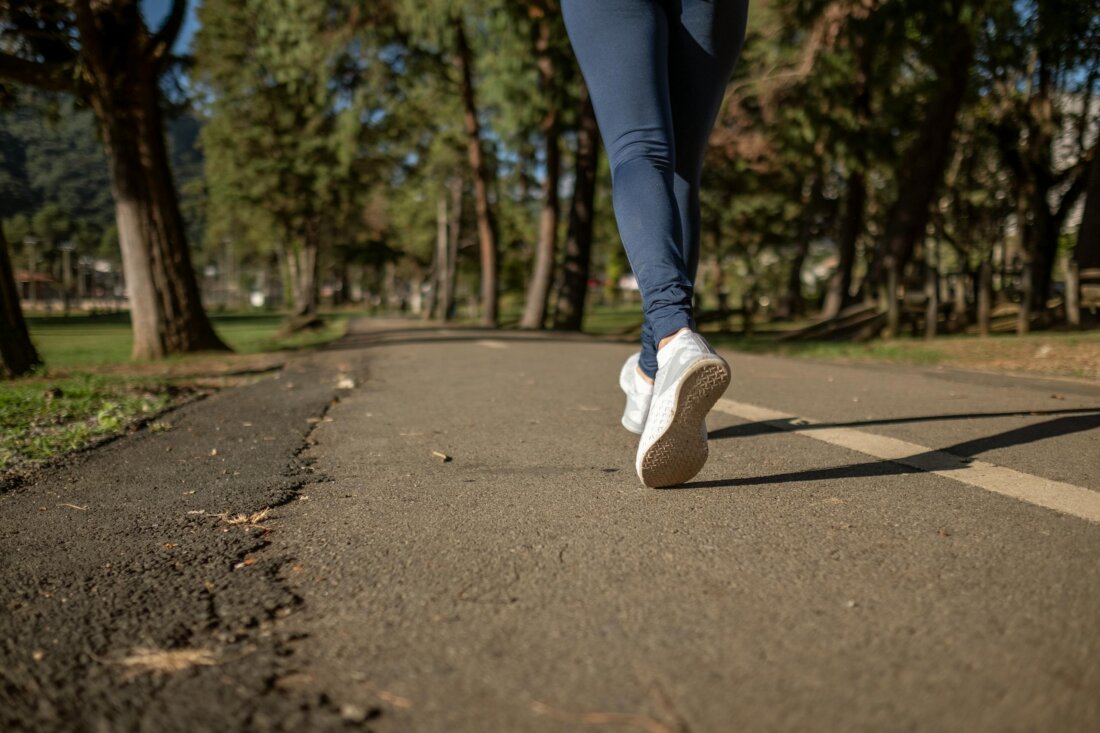
Japanese Walking: The 30-Minute Trend Overtaking Everything

5 min Reading Time
3,000% search growth in one year. Japanese Walking is the fitness trend currently sweeping everything aside – and the best part? You need neither a gym nor any equipment. Just 30 minutes of alternating brisk and slow walking. Science backs you up.
 Quick Sprint
- 3,000% search growth: According to the PureGym Report, Japanese Walking is the fastest-growing fitness trend of 2026.
- Scientifically proven: Researchers at Shinshu University observed a 10% increase in VO₂peak and a 9 mmHg reduction in systolic blood pressure after five months.
- 30 minutes is enough: Alternate three minutes of brisk walking with three minutes of slow walking – that’s the entire secret.
- For all fitness levels: No equipment, no prior experience, and no joint stress like jogging.
- Viral sensation: Over 400 million views on TikTok under #intervalwalking and #japanesewalking.
What is Japanese Walking?
Forget everything you thought you knew about strolling. Japanese Walking – officially called Interval Walking Training (IWT) – is a structured program that alternates between brisk and leisurely walking. For three minutes, walk as if you’re racing to catch a bus. Then stroll for three minutes as if you’re meandering through a park. Repeat this cycle five times. Done. Thirty minutes. No equipment. No gym.
The method was developed by Professor Hiroshi Nose and his team at Shinshu University in Japan – not for Instagram, but as a rigorously designed scientific training protocol. Research has been ongoing since the early 2000s.
Why is this trend exploding right now?
TikTok. That’s it. In early 2026, Japanese Walking went viral – and momentum quickly snowballed. Relevant hashtags now tally over 400 million views. But this hype has substance: According to the PureGym Annual Fitness Report, Japanese Walking is the year’s fastest-growing fitness trend, with nearly 3,000% search growth.
The reason is obvious. For many people – especially beginners – running is simply too hard. Joints ache, lungs burn, and motivation vanishes after the third lap around the park. Interval Walking solves precisely this problem: You get the benefits of interval training without the downsides of high-impact exercise. And you can do it anywhere – in the park, on your commute, even on vacation.

What does the science say?
Here’s where it gets interesting. Unlike many TikTok trends, Japanese Walking rests on solid, peer-reviewed research. The landmark 2007 study led by Nose and his team followed over 680 participants aged 44 to 78. After five months, results included:
Source: Shinshu University, Nose et al., 2007
For comparison: Participants who simply walked at a steady pace showed no significant improvements. It’s the deliberate shift between intensities that makes the difference.
Research team led by Prof. Hiroshi Nose, Shinshu University (paraphrased)
Your starter plan: 4 weeks of Japanese Walking
You don’t need an app, a trainer, or special shoes. Comfortable sneakers are more than enough. Here’s your plan for the first four weeks:
Weeks 1-2: Build your base
- 3 sessions per week, 20 minutes each
- Walk briskly for 3 minutes (as if you’re in a hurry), then slowly for 3 minutes
- Complete 3-4 intervals per session
Weeks 3-4: Step it up
- 4-5 sessions per week, 30 minutes each
- Increase pace during brisk phases (you should feel slightly breathless – but still able to speak in short sentences)
- Complete 5 full intervals per session
From Week 5 onward: Advanced
- 5-6 sessions per week; add inclines (hills, stairs) optionally
- Intensify brisk phases with purposeful arm movement
- Optional next step: Add rucking (walking with weight)
Who is Japanese Walking for?
Essentially, everyone. But these groups benefit especially:
- Re-starters: You’ve been inactive for a long time and want to ease back in? Perfect. IWT was originally designed for older adults.
- Desk-bound professionals: Just 30 minutes at lunchtime suffices – no changing clothes, no shower needed afterward.
- Runners with joint issues: Same cardiovascular benefits, minus the impact stress of jogging.
- Parents: Stroller-compatible. Seriously – the intervals work even with a buggy.
- Travelers: Doable anywhere, no equipment required, no Plan B needed. New city? Just start walking.
Proper technique: How to maximize results
Japanese Walking sounds simple – and it is. But a few technical details separate a “nice stroll” from real training:
Brisk phases: Imagine you’re running late and must catch the train. Take long strides, swing your arms actively, engage your quadriceps. You should feel slightly breathless – if you can chat comfortably on the phone, you’re going too slowly. Aim for a 6-7 on a perceived exertion scale of 1-10.
Slow phases are intentionally relaxed – not standing still, but significantly dialing down intensity. Let your arms hang loosely and normalize your breathing. This is your active recovery window. Use it to notice your surroundings, let your heart rate drop, and mentally reset.
Posture: Stand tall, gaze forward (not at your phone), shoulders back. Sounds basic – but most people walk hunched forward, limiting lung capacity and making brisk phases unnecessarily harder.
Timing: The original study used exactly 3 minutes per phase. You may begin with a 2:1 ratio (2 minutes brisk, 1 minute slow) or progress to 4:2 as you grow stronger. But the 3:3 format has the strongest evidence base.
What most people get wrong
Most common mistake: Brisk phases aren’t brisk enough. Many beginners walk at nearly the same pace in both phases – yielding minimal training effect. Contrast is critical. Your heart rate must rise noticeably during brisk intervals.
Second mistake: Walking every day. Even though IWT is low-impact, your body still needs rest. Three to five sessions per week is optimal. On off-days, you may walk normally – but avoid intervals.
Third mistake: Quitting too soon. The first two weeks feel unremarkable. Measurable improvements typically emerge between weeks four and six. Stick with it – the study shows peak results after five months.
Japanese Walking vs. other trends
How does Interval Walking stack up against other popular methods? A quick comparison:
Vs. 12-3-30 (treadmill): The 12-3-30 method (12% incline, 3 mph, 30 minutes) works – but requires a treadmill. Japanese Walking functions outdoors, indoors, anywhere. And its intervals challenge the cardiovascular system more effectively than steady-state treadmill walking.
Vs. jogging: Jogging burns more calories per minute. But dropout rates are high because it feels punishing to beginners. IWT demonstrates superior long-term adherence in studies.
Vs. rucking: Rucking (walking with added weight) is the natural progression. Master IWT first – then add load. That’s how you build a durable foundation.
Conclusion
Japanese Walking isn’t hype without substance. It’s a scientifically grounded training method delivering exactly what most people need: tangible results with minimal effort and zero entry barriers. That TikTok has only just discovered it is long overdue – the research has been robust for over 20 years. Grab your shoes and go. Three minutes brisk, three minutes slow. Your body will thank you.
Cool-down
Click any question to expand its answer.
Is Japanese Walking really better than regular walking?
How fast should I walk during the brisk phase?
Can I do Japanese Walking in any weather?
Do I need special shoes?
How often per week should I do Japanese Walking?
Header Image Source: Pexels / Daniel Reche (px:3601098)