






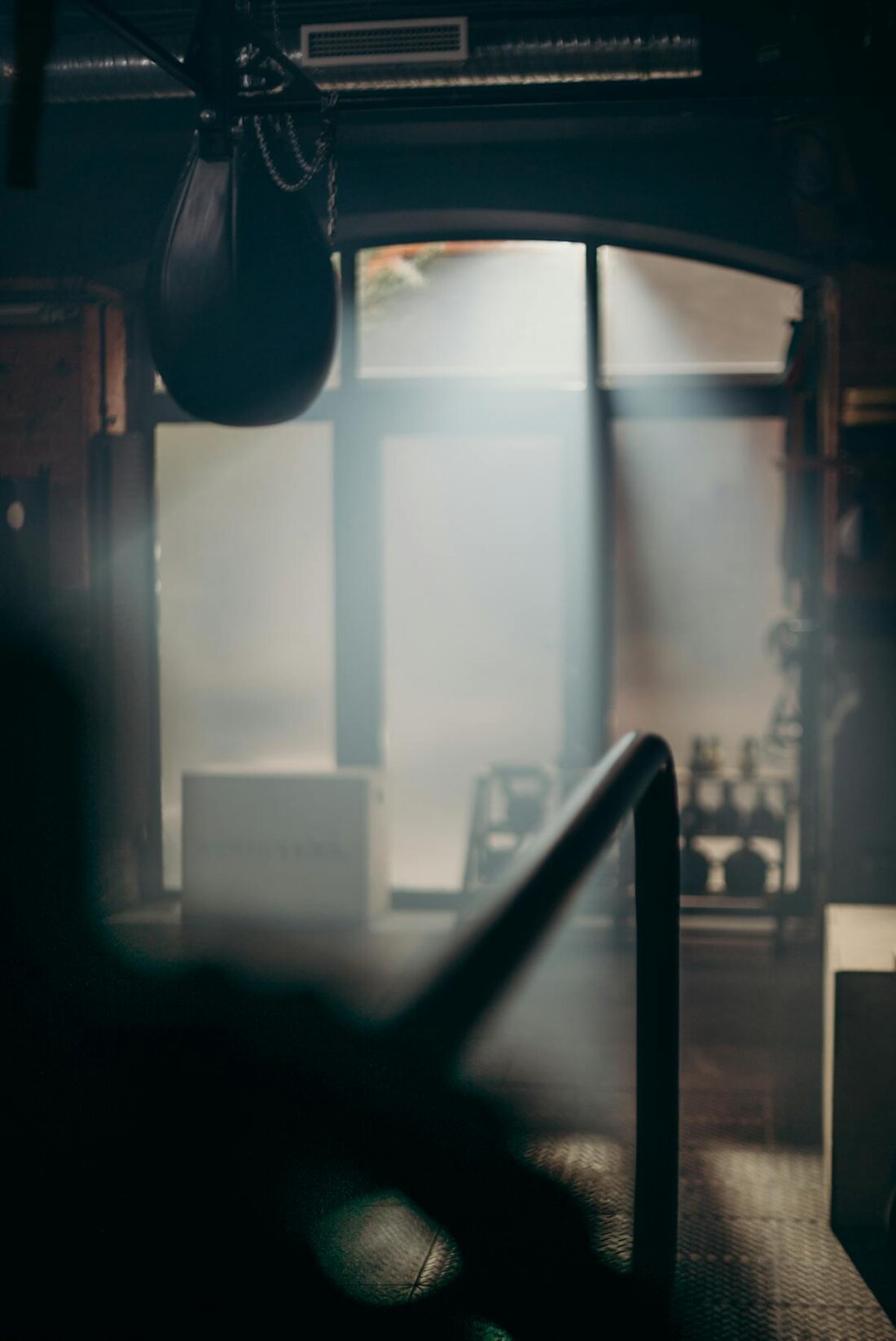
Boxing: Why the World’s Toughest Sport Is Your Best Full-Body Workout
7 min Reading Time
Jab. Cross. Hook. Uppercut. Four punches – and your entire body is working: shoulders, core, legs, back. In 30 minutes on the heavy bag, you burn 300 calories. In one hour, up to 800. Boxing is the sport most people shy away from – and precisely why it’s so effective. Sixteen studies confirm: boxing training improves mood, self-confidence, and concentration. It reduces anxiety, depression, and post-traumatic stress. You don’t have to hit anyone. But you’re allowed to.
What Boxing Does to Your Body
A jab isn’t just an arm movement. It starts in your rear foot, travels through hip rotation into your torso, and only in its final phase is accelerated by the arm. Every punch is a kinetic chain that activates your entire body. That’s why boxing isn’t arm training – it’s full-body training at its highest level.
Muscles engaged during a typical boxing session include: deltoids and rotator cuff (shoulders), biceps and triceps (punching and guarding), pectoralis major (cross and hook), latissimus dorsi and trapezius (retraction and stabilization), rectus abdominis and obliques (rotation and stabilization), glutes (power generation), quadriceps and calves (footwork and pivots).
Calorie burn ranges from 390 to 800 per hour, depending on intensity. For comparison: running burns 500-700, cycling 400-600, and swimming 400-700. Boxing sits at the top end because it simultaneously demands strength and endurance. Your heart works at 75-90% of maximum heart rate while your muscles push against the resistance of the heavy bag or focus mitts.
„Sixteen studies specifically examined non-contact boxing and mental health. Results showed significant improvements in mood, self-esteem, and concentration – as well as symptom reduction in depression, anxiety, and post-traumatic stress disorder.“
Mental Health: Why the Heavy Bag Beats the Couch
The mental benefits of boxing are better documented scientifically than those of most other sports. High-intensity activities like boxing lower cortisol (the stress hormone) and trigger endorphin release – that’s the physiological part. The psychological component is equally vital.
Boxing gives you a controlled outlet for aggression and frustration – not as uncontrolled outbursts, but as channeled intensity. The heavy bag absorbs everything you throw at it, and you walk home calmer than when you arrived. In a world where most people internalize stress, that’s genuinely therapeutic.
Then there’s the confidence effect. Boxing teaches you that you’re stronger than you think – not because you can beat someone up, but because you endure 30 minutes on the heavy bag even though your body begged you to quit after ten. That experience transfers directly to daily life. Anyone who regularly pushes their limits develops less fear of challenges.
The Four Fundamental Punches – and How to Learn Them
1. Jab (lead hand). The fastest punch – and your most essential tool. A straight shot forward from a shoulder-width stance, front foot pointing toward the target. The jab isn’t about brute force; it’s a precision instrument. It sets rhythm and opens your opponent’s guard. Practice 50 jabs on the heavy bag: start slowly, prioritize clean technique, then gradually increase speed.
2. Cross (rear hand). The power punch. A straight shot forward – but with full hip rotation. Power comes not from the arm, but from the twist of hips and torso. Your rear foot pivots on the ball. When you feel the cross, you feel it in your whole body – that’s how you know the kinetic chain is firing.
3. Hook (side punch). Delivered horizontally at chin or body height. Your arm forms a 90-degree angle; power originates in hip rotation. The hook trains your obliques (side abdominal muscles) more effectively than almost any other exercise. First master the motion without the bag – then add impact.
4. Uppercut (upward hook). A rising blow from below, initiated with a slight knee bend and explosive extension. The most complex fundamental punch. Simultaneously engages legs, core, and shoulders. Introduced later in training – only once jab, cross, and hook are solid.
- ▸ Boxing gloves, 12-14 oz (€30-€60)
- ▸ 4.5-meter elastic hand wraps
- ▸ Sportswear + indoor athletic shoes
- ▸ Mouthguard (only for sparring)
- ▸ Headgear (only for sparring)
- ▸ Boxing shoes (indoor athletic shoes suffice)
Your 30-Minute Heavy Bag Workout
This workout requires only a heavy bag and gloves – no sparring partner needed. Three sessions per week deliver noticeable results. Between rounds: 30 seconds of active rest (light shadowboxing or jump rope).
Round 1 (3 min): Jab only. Find your rhythm. Left jab, right jab, combinations. Focus on technique – not power.
Round 2 (3 min): Jab-cross combinations. Double-jab followed by cross. Rotate hips fully with each cross.
Round 3 (3 min): Jab-cross-hook. Three punches in sequence. The hook follows immediately after the cross – no pause. Feel the rotation.
Round 4 (3 min): Free striking. All combinations, your own rhythm. Intensity at 80%. This round becomes Tabata-like.
Round 5 (3 min): Power round. 10 seconds all-out, 20 seconds easy. Repeat six times. Final round – give it everything.
Cool-down (5 min): Light shadowboxing, shoulder circles, stretching for shoulders and hip flexors. A foam roller is recommended for shoulder musculature.
Where to Get Started
Every major German city has boxing gyms and fitness studios with dedicated boxing areas. Monthly fees range from €30 to €80. Many offer free trial classes. Prioritize two things: Are certified trainers on staff (licensed by the German Boxing Federation)? And do they offer beginner classes without sparring?
Fitness boxing (also called cardio boxing or box-fit) is contactless. You strike the heavy bag and focus mitts – never an opponent. That makes entry accessible. No prior experience, no elite fitness level, and no hesitation about sparring required. Most beginners are pleasantly surprised by how welcoming boxing gyms are – even if they have zero competitive ambitions.
Prefer solo training? A freestanding heavy bag for home use costs €80-€200. Combined with jump rope and shadowboxing, you’ve got a complete home workout – one that doesn’t replace the gym, but complements it perfectly.
 Cool-down
Click any question to expand its answer.
Do I need to spar to benefit from boxing training?
Which glove size do I need?
Is boxing bad for your hands?
How often should I train per week?
Is boxing suitable for women?
Header Image Source: Pexels / cottonbro studio (px:4753881)